
Have a question?
Contact us
The Association for Advancing Physician and Provider Recruitment (AAPPR) is redefining recruitment to retention and is the only professional organization where physician and provider recruitment leaders and others who influence recruitment, onboarding and retention can connect, learn and advance their careers.

Anyone that knows me, knows that I’m an avid cruiser. In fact, I usually take 2-3 cruises a year. After over 25 voyages – and I thought I saw everything – I witnessed my first emergency rescue at sea – and it was literally 200 yards outside of my balcony. On a recent cruise, we were sailing from Florida to Cozumel, Mexico when at about 11:30am the captain made an announcement that he verified a “vessel in distress” and that we were turning around to rescue the sailor. He proceeded to make the smoothest U-turn I’ve ever seen and within 30 minutes we could see the distressed vessel and a single occupant. The winds were rough, and the waves were even rougher, actually tossing his Catamaran like a doll and it looked like it could capsize at any moment. The first attempt to lower the Lifeboat failed as the waves only pushed it against the ship, so it was raised and secured. After a while the sailor dropped a smaller boat from the Catamaran and got into it with two paddles. The waves did not let up and were now pushing the Catamaran closer to the Ship. At this point the captain – like a scene out of a James Bond movie – spun the ship around parallel to the waves to avoid contact with the Catamaran. We were 40 miles off the coast of Havana, Cuba and I really expected to hear a US Coast Guard helicopter to finish the job. Suddenly, a different Lifeboat came from around the front of the ship and darted straight to the sailor, they pulled him in and darted him back to the ship – navigating the waves like they’d done this a few times before. We on the ship screamed and cheered like the winning touchdown was scored – it was unbelievable!
Since we were so close to Cuba, most thought the sailor was a Cuban national making his way to the US. However, we later learned that the experienced sailor was a US Citizen, in his 70s, a Florida resident, and had been at sea since Thanksgiving. He had been without his two Sails and engine power for five days and it was only after shooting his Flare gun that he caught the attention of the ship. Once aboard, he received medical attention, a hot meal, and quarters to rest. Upon arrival at Cozumel, he was released to the Mexican authorities and made his way back to Florida.
When I think of my decades of experience as a physician recruiter, I can recall times – even recently – when I felt like that sailor. Whether its organizational change, managing a complex search, or accommodating a demanding stakeholder or candidate, I’ve felt like my primary sails and engine were no longer working and I needed a ‘rescue’. When it comes to the sailor – and you and me – one thing’s for sure, he knew how to get the help he needed. As an AAPPR member, you have some essential resources that get you back to center – and right at your fingertips!
For me, this resource is me shooting my flare gun in the air – my distress call. I send my question or issue to my colleagues, and, in short order, someone takes notice, stops what they’re doing, and give me the real time feedback, information, or recommendation that brings me to safety. AAPPR Chat is a wealth of insight, support, and generous professional assistance – it’s the digital version of phoning a friend.
I’ve always believed that our profession/role is strategically aligned with the C-Suite and we’re most valuable when armed with insight and information to that audience. ACADEMY is where I can go for that info! From topical and on-demand Webinars and Resource Library to the AAPPR Benchmarking Survey, there’s a treasure trove of tools that informs and empowers my role – particularly when the organizational waters feel a bit rough for me.
These monthly sessions, offer timely discussion around topics surrounding our profession along with exploring new and innovative ways for recruitment. Virtual Roundtables, free to members, gives space for us to work together and establish new practices and tactics to meet the needs of our healthcare organizations.
Navigating rough and challenging waters, though uncomfortable, are a normal part of business. However, like that experienced sailor, the attention, and solutions available to you are just one ‘flare’ away. Tap into AAPPR member resources and keep sailing!

Recruitment is a fast-paced industry. Especially healthcare recruitment where there is a shortage in supply of candidates while the demand is extremely high. Healthcare recruiters often have no choice but to answer that physician candidate after 6pm or on a Saturday when the candidate is finally free from patient care. Never mind recruiters have a family of their own and well deserved precious personal time to enjoy.
This is why it is so important for all of us to work on Self-Care.
Remember, self-care is not selfish; it’s essential for your long-term well-being and success as a recruiter. By prioritizing your physical and mental health, you’ll be better equipped to handle the demands of your job and achieve greater job satisfaction.

Every person has a different approach to listening, learning, and working. Having different thought processes, different backgrounds, and different ways of communicating is essential in the workplace. When we talk about diversity, equity and inclusion in the workplace, many people immediately think about diversity in race, age, or gender. Today, I would like to talk about diversity in thought and information processing and how to make sure we are inclusive to everyone.
For the first 17 years of my life, I did not know that I had ADHD. I knew that I was not like all my classmates and teammates and that I processed information differently. However, I thought it was my fault and that I just needed to try harder. At the time, people were not aware of how ADHD can present in various ways, so it was assumed that I did not have it. After receiving my diagnosis, I panicked and thought my dreams might be unreachable because of it. Over the next few months, I learned more about how people receive and process information, as well as how these differences can lead to some amazing successes in life. There are amazing people who have had success and are navigating the world with ADHD, such as Simone Biles, Albert Einstein, Bill Gates, Michael Jordan, and more.
There are barriers to achieving this success and actions we take each day can make it easier for people to overcome those barriers. It is important to remember that when you are communicating with others, you may be giving them the same message, but it may need to be delivered differently. Clear and personalized communication benefits everyone, especially those who may be neurodiverse.
Some strategies to clarify your communication and help accommodate the neurodiverse population include:
1. Reflect on the appropriate method of communication. There are multiple methods of communication, and while a text message might be great for one person, a meeting might be better for another. People feel supported and heard if you ask what their preferred method of communication is.
2. Identify your purpose or call to action. With this communication, what are you trying to accomplish? Is it informative or is there a task that needs to be completed? Clearly identifying the call to action or purpose and highlighting that early in the communication can help people know what to keep in mind when reviewing the information.
3. Provide written deadlines and expectations. Even if you initially have a phone conversation with someone, following up with written deadlines, expectations, and instructions can help ensure that everyone is working towards the same goal and timeline.
4. Reduce stigma. Many people with ADHD struggle with whether they should disclose their diagnosis in the workplace out of fear it could lead to stigma and discrimination. You can work to promote a sense of inclusivity and openness within your workplace.
It is essential as working professionals, but also as those in healthcare and recruitment, that we increase our inclusivity and promote diversity in thought.

In the busy summer season for Physician Recruitment, it’s crucial to find a balance between productivity and well-being. Work-life balance is not just a trendy term; it’s essential for maintaining high performance and preventing burnout in this fast-paced industry. Here are some effective strategies for maintaining balance, boosting productivity, and promoting resilience during this important time:
First, make sure to discuss the expectations with leadership about the summer recruitment season. Keep senior management updated on market conditions and the need to promptly respond to candidate inquiries. Emphasize the importance of setting clear hiring goals to make decision-making processes more efficient and ensure timely engagement with candidates.
Review your recruitment workflows regularly to identify any bottlenecks and inefficiencies. It’s important to note that summer vacations can disrupt timelines, so it’s a good idea to implement strategies to maintain momentum during this time. Consider utilizing analytics from recruitment platforms such as PracticeLink and Doximity to optimize your job postings and outreach efforts. These tools can provide valuable insights into candidate preferences and market trends, giving you a competitive edge in recruitment.
Remember to fully embrace technology tools to increase productivity and streamline recruitment processes. Automated scheduling tools for emails and texts enable seamless communication, even when team members are unavailable. Platforms like PracticeMatch provide comprehensive data analytics to refine recruitment strategies and effectively target specific candidate demographics.
Maintain ongoing communication with past recruits to gather feedback on their experience and insights into workplace dynamics. Use these conversations to assess retention factors and identify areas for improvement. Building strong relationships fosters trust and loyalty, enhancing the organization’s reputation and attractiveness to prospective candidates.
Encourage team members to prioritize mental health by scheduling regular breaks and engaging in activities that promote relaxation and rejuvenation. Incorporate mindfulness practices into daily routines to alleviate stress and maintain focus. A refreshed mind contributes to sharper decision-making and sustained productivity throughout the recruitment process.
It’s crucial to acknowledge the significance of balance and resilience in retaining talent within the competitive physician recruitment industry. Organizations can reduce turnover rates and ensure long-term success by giving priority to employee well-being and operational efficiency. Investing in professional development and creating supportive work environments enhances employee engagement and organizational resilience.
As we dive into the summer recruitment season, it’s important to approach it with a good balance of productivity and well-being. To make the most of this season, recruitment professionals can focus on open communication with leadership, streamlining processes, making the most of technology, nurturing relationships, prioritizing mental well-being, and building long-term resilience. These strategies will help us achieve our goals while also taking care of ourselves.

In the heart of healthcare, where every recruitment decision can touch countless lives, lies an incredible opportunity—not just for professional growth, but for genuine connection and mutual support. It’s in this spirit that I want to talk about our journey at AAPPR and how we’re not just navigating this path, but thriving on it, together.
AAPPR’s latest strategic plan isn’t just a blueprint for the future; it’s a testament to our collective resolve to elevate our profession. It’s about recognizing the power of community and the undeniable impact we can have when we come together. Whether you’re stepping into the world of healthcare recruitment, or you’ve been guiding its evolution for years, there’s something deeply empowering about knowing your part of a community that genuinely cares about your growth and success.
So, how do we keep this community thriving, you ask? Well, it’s all about coming together, both in person and virtually, to connect with fellow AAPPR members. These events are our chance to swap stories, celebrate wins, and dive into the nitty-gritty of what’s working (and what’s not). It’s like a big brainstorming session, packed with fresh ideas, innovations, and a whole lot of inspiration to fuel your journey forward.
Our online community, AAPPR Chat, is like stepping into a lively coffee shop where conversations are brewing around every corner, ready to spark new ideas and insights. And if you’re looking for a more intimate setting, our regional Shared Interest Groups (SIGs) are like cozy nooks where you can dive deep into the intricacies of our field with like-minded peers.
Our virtual roundtables are where the heart of our community beats the loudest, bringing to the forefront the pressing issues we face and the collective wisdom we hold. And for anyone seeking a guiding light or looking to be one for others, our Mentor Match program embodies the essence of paying it forward.
This is more than just a strategic plan. It’s a reflection of our shared vision to not just advance in our careers but to do so with a sense of belonging, understanding, and shared purpose. So, let’s take this journey together, with open hearts and minds, ready to support each other every step of the way. Because at AAPPR, we’re not just colleagues; we’re a community, committed to not just navigating but thriving in the ever-evolving landscape of healthcare recruitment.
Diversity in the healthcare workforce is not just an ethical goal but a strategic necessity that improves patient care and advances community health. Healthcare providers from diverse backgrounds are better equipped to identify and address disparities in healthcare outcomes, offering culturally sensitive care that meets the needs of all demographics. As gatekeepers of workforce composition, recruitment professionals play a crucial role in creating an inclusive healthcare environment that serves our communities.
Elevating Retention Through Inclusive Environments
For AAPPR members, the balance between recruiting and retaining talent is paramount. Creating an inclusive workplace is critical; without it, healthcare organizations may face a costly cycle of turnover. Fostering a welcoming atmosphere that celebrates diversity is vital to ensure new professionals feel valued and engaged.
2. Cultivating Leadership from Within
It is essential to provide clear and accessible paths for career advancement to all employees working in your organization. Members of AAPPR can play a crucial role in promoting a transparent promotion process during interviews, ensuring the development of workflows that emphasize the importance of avoiding biases and creating an inclusive environment for hiring the best clinicians for your organization. This process starts by confirming diversity awareness and goals with all parties involved in making decisions related to job offers. An organizational-wide posting system is an excellent tool to democratize information about career advancement opportunities.
3. Crafting a Diversity-Friendly Brand
It’s important to remember that how people perceive your healthcare organization can have a big impact on how successful you are at recruiting new staff. In addition to formal advertising, members of AAPPR should also think about how the reputation of their organization spreads through word-of-mouth. Establishing a reputation for genuinely supporting diversity can be a powerful way to attract diverse talent.
4. Expanding Networks for Diverse Talent Engagement
Networking plays a vital role in creating successful diversity recruitment and retention strategies. As AAPPR members, it is essential to build strong connections not only within the organization but also in the broader community. Do you have access to networks that can provide information about emerging talent among family members or those who have recently acquired new skills? These relationships are crucial for creating a diverse pool of candidates and should be a priority for AAPPR members who want to improve the diversity of their healthcare teams.
5. A Proactive Approach to Diversity
AAPPR members are uniquely positioned to advocate for proactive recruitment and retention strategies. They can achieve this by encouraging diverse workplaces, ensuring that advancement opportunities are visible and accessible, building strong networks, and enhancing their organization’s reputation. By doing so, AAPPR members can steer their organizations toward a future with a dynamic and inclusive workforce.
Diversity plays a crucial role in driving innovation, as it brings in a range of experiences and ideas, leading to improved problem-solving and medical breakthroughs. Recruitment professionals can promote fair hiring practices and implement intentional strategies that create a healthcare system reflective of the society it serves.
AAPPR has a strategic plan in place to educate recruiters on diversity best practices, equipping them to attract and retain a diverse workforce. Our members play a pivotal role in this mission by ensuring that the workforce reflects and embraces the patients in the communities they serve.
Through our strategic plan, AAPPR is leading by example, demonstrating that the commitment to diversity is more than just a strategic priority—it is a defining principle for the future of healthcare and recruiting the Clinical Provider workforce of tomorrow.
We can see physician candidates’ priorities evolving, focusing on family time and better work-life balance. Acknowledging and accommodating these needs has become a pivotal aspect of successful recruitment.
Recruiting physicians from out of state, especially those with families, requires a nuanced approach. While understanding the candidate’s professional motivations is important, diving deeper into their family needs is equally vital.
Even if a candidate hasn’t openly shared details about their family, gentle inquiries can be made to accommodate their needs.
When physicians have high school-aged children or family members with special needs, things can become more complex. Spousal career prospects are important as well in the candidate’s decision-making process.
Depending on the family dynamic, being close to a major airport or assessing the potential impact on a spouse’s career might influence the candidate’s decision.
Building connections between the candidate’s family needs and the prospective community is an integral part of the recruitment process. Understanding if they have ties to the area or if they have visited the area before is important.
Beyond organizing the candidate’s visit, including the spouse by offering information about local attractions and amenities adds a personal touch. It makes the family feel involved and valued in the decision-making process.
During in-person interviews, involving the family by arranging community tours or engaging a trusted realtor to showcase the area can help the family imagine their life in the community. Understanding the spouse’s profession can help to tailor experiences that resonate with their interests.
Hosting joint dinners with other physicians and their partners creates a supportive network, showing support and camaraderie.
Success in physician recruitment isn’t just about understanding the provider; it’s about comprehending the dynamics and motivations of their entire family. By holistically addressing their ” why, ” recruiters forge connections and create a path to success for everyone involved.

As the year winds down and the seasons shift, it’s a natural time for reflection, and this year holds special significance for me as my tenure on the Board will soon come to an end. But before we embark on that transition, I’m excited to highlight the victories of this year, driven by our unwavering commitment to our Mission, Vision, and Values, which are charting a course for our future.
Our AAPPR community has surged to over 2,300 members, and we’ve witnessed the formalization of several affiliates into Shared Interest Groups (SIGs). Just last month, we gathered our AAPPR Team, Board, SIG, and Affiliate Leaders in Ft. Lauderdale, not only to ponder the future but also to share the remarkable strides we’ve already made as an Association. And there’s much to celebrate!
At the end of 2022 I shared that we had secured a media relations firm to help further position the Association and our members as THE thought leaders in our space. With that addition, as well as adding a Senior Marketing Manager in Alysia Gradney to the AAPPR team, our media influence continues to grow. As of December 1st, the Association has remarkably secured a 22% market share of voice through our strategic marketing and communication endeavors. This encompasses sharing invaluable research, establishing AAPPR members and staff as distinguished thought leaders, and nurturing connections with journalists to solidify our position as the leading authority in Physician and Advanced Practice Provider Recruitment, Onboarding, and Retention.
AAPPR has expanded our reach into fresh dialogues with C-Suite leaders, healthcare media, and the public. Our AAPPR Benchmarking report has garnered attention from respected publications like Becker’s Hospital Review, Becker’s ASC Review, Staffing Industry Analysts, and Medical Economics, potentially reaching an audience of 168.4 million people! Board members are slated to speak at the 2024 HIMSS Conference, with more speaking opportunities in the pipeline. AAPPR and its leaders are also participating in interviews with several leading healthcare publications, and even being invited to participate in an IMG taskforce recently in Washington, DC.
This year was also a strategic planning year for the Board of Directors, and you can find that Strategic Plan, along with our updated Mission, Vision & Values on the AAPPR website. The strategic planning process entails months of gathering input from and listening to our strategic partners, our volunteer leadership, our members and our staff. The five-year roadmap projects a vision for the future that will serve to inspire us to create a world where everyone has access to care, guided by our core values of Respect, Equity, Collaboration, Responsibility, Understanding, Inclusion and Trust (RECRUIT).
These are just a few of the many accomplishments, initiatives, and visions that have come to life this year. I could fill months with all we’ve achieved. Ultimately, I’m immensely proud of this Association—a Board of Directors who have joined me on this journey with a collaborative line of sight to the future, a CEO and staff who enthusiastically steer this train for us, and our members who, day in and day out, excel in their roles with unwavering passion. My gratitude runs deeper than any words on paper could possibly convey.
With the annual conference just around the corner, my time on the Board will come to an end but AAPPR in 2024 and beyond promises to continue the trajectory of influence, impact and expertise! Anticipate more white papers, an expanded media presence, and an unceasing commitment to delivering the solutions you need to excel and make a lasting impact in your communities. And don’t forget that registration is now open for the Annual AAPPR Conference in Virginia Beach, featuring Keynote speakers Doyin Richards and Amelia Nagoski—don’t miss out on early bird specials!
As we enter this winter season, take a moment to reflect on your own accomplishments and the exceptional work you do. Enjoy time with your loved ones, embrace your traditions, and celebrate yourselves. Because it is all of you who bring AAPPR’s Vision to life.
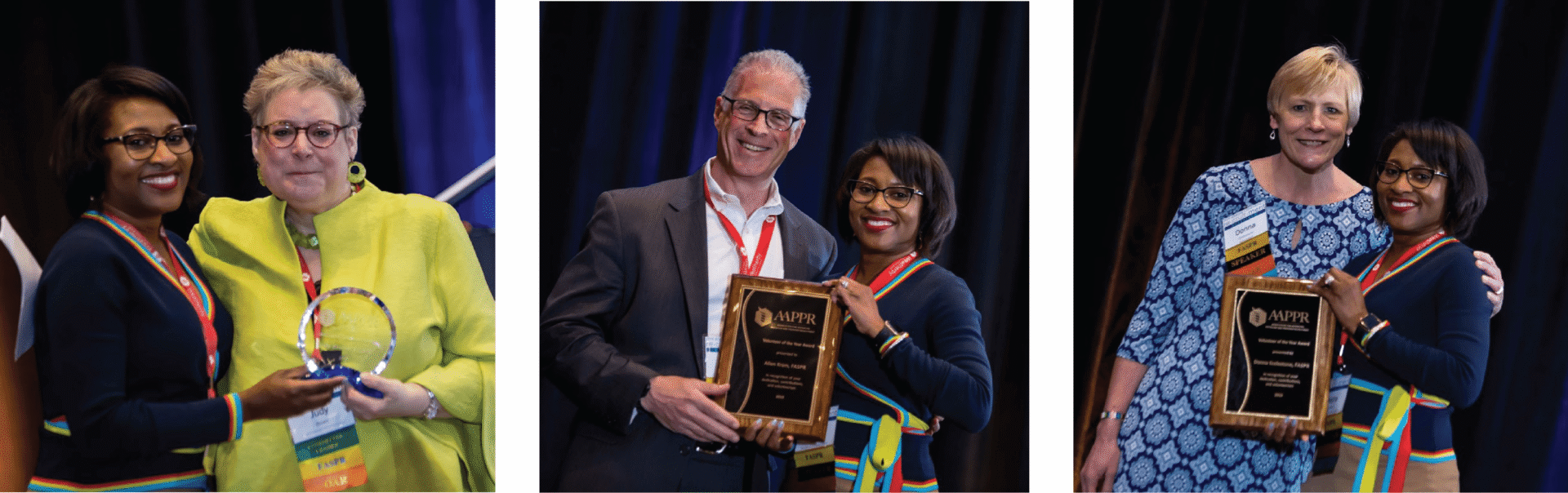
Volunteering has been a part of my life for as long as I can remember. Volunteering was an expectation in my family, and those who volunteered earned the highest accolades from the matriarchs and patriarchs. My grandparents, father, and uncles were all accomplished community volunteers, and it was clear to me early on that I was supposed to volunteer. The sense of accomplishment and, let’s be honest, the recognition from my family, especially my grandmother, began to be what filled my cup. As I began researching current attitudes about volunteering, I realized that my family set me on a path of “volunteer inertia.” [i] Volunteer inertia is a concept in which volunteering becomes a habit. I have a habit of volunteering, saying “yes!” Some might say too much!
Before the pandemic, I noticed that many volunteer organizations I served struggled to engage new volunteers. We seemed to have the same few people doing the lion’s share of the work, and with the same volunteers each year, an agenda set on repeat. Even with the gift of volunteer inertia, I was becoming a bit burnt out and bored. Then COVID hit, and almost all volunteer projects stopped for over a year. Based on the US Census Bureau study, volunteer participation in the United States decreased by 23.2 percent between 2019 and 2021, the most significant decrease since they started tracking in 2002. [ii] Volunteers across America lost their volunteer inertia during that nearly two-year hiatus, and some never got it back.
AAPPR and our affiliate organizations were not immune to this disengagement. During 2021 and 2022, affiliate leaders reported a lack of interest in re-engaging leadership and committee roles. Some affiliate leaders found themselves juggling the pressures of their full-time jobs and more projects and day-to-day affiliate operations due to a lack of volunteers. Burnout was becoming a common theme among affiliate leaders and committee members, many of whom were well past their term limit and no succession in sight. AAPPR staff also noticed a degree of disengagement among committee volunteers and fewer new faces. The AAPPR Board of Directors and CEO Carey Goryl recognized that our membership’s skills, diversity, experiences, and perspectives were our most valuable resource, and we had to act fast to implement a fresh approach!
The AAPPR staff and Board launched some strategies aligned with current volunteerism research and our strategic plan, including our values of Respect, Equity, Collaboration, Responsibility, Understanding, Inclusion, and Trust (RECRUIT).
AAPPR Volunteer Pool: The AAPPR Volunteer pool focuses on the organization’s strategic plan and volunteer satisfaction. Current research shows that volunteer projects must provide a clear understanding of the project, a flexible schedule, a defined time commitment, an equitable chance to contribute, and a meaningful and gratifying experience. AAPPR’s Volunteer Pool allows members to register yearly to participate in various projects and discussions that match their availability and interests. The Pool is inclusive and accessible to all members—a perfect match for our values- RECRUIT.
To join the AAPPR Volunteer Pool, visit https://member.aappr.org/page/volunteer_pool to become a member volunteer.
Regional SIG (Shared Interest Groups): The AAPPR Board of Directors and CEO Carey Goryl recognized that the education, community, camaraderie, and resources provided by shared interest groups are essential to the AAPPR community. AAPPR has always supported regional and state affiliates to various degrees, but some affiliates needed even greater support. The AAPPR Board and CEO Carey Goryl agreed that AAPPR could help by expanding our SIG (Shared Interest Group) model to include regional/state affiliates. This model allows an affiliate to transfer the nonprofit operational duties to AAPPR and affiliate volunteers and members to focus on education and network activities through AAPPR’s resources. Preserving the affiliate’s identity has been of the utmost importance and will evolve as AAPPR members join the group as part of their AAPPR membership. Six affiliates have fully transitioned to a SIG, and several more have indicated their intent to transition in 2024 or 2025.
As life becomes full, l find myself becoming more selective about my volunteer projects and the experience I have as a volunteer. I know I’m excited to volunteer in the new AAPPR Volunteer Pool and a SIG supported by AAPPR.
Happy Volunteering!
[i] https://longevity.stanford.edu/three-reasons-why-people-dont-volunteer-and-what-can-be-done-about-it/
[ii] https://www.census.gov/library/stories/2023/01/volunteering-and-civic-life-in-america.html

Today’s physician and provider recruitment landscape has never been more filled with talent supply constraints, economic influencers and pressures, provider burnout, and the growing demand for our industry to be more agile and poised for success.
Just like you, I remain dedicated to advancing our mission-critical work and fueling the acceleration of transformation for our industry; but, as with each decision we make on a daily basis, we’re rooted in the guidance of data (along with some healthy intuition we’ve built over our experiences throughout the years)! Luckily, we have a trusted compass in our toolkit to help keep us on the right path – the AAPPR Benchmark Report. The 2023 survey report represents more than 150 organizations that participated in the extensive annual research study, representing more than 19,000 searches.
As a leader, I am accountable for ensuring our recruitment processes enable efficiency, high performance, and outstanding service excellence. Although a difficult journey, the benchmark report provides insightful aggregate data reported by leaders in our field to allow comparisons of our key performance indicators (KPIs) with those experienced across similar organizational types and sizes. From interview-to-hire ratios to time-to-fill, these data points play a contributing role in determining where a team’s performance gaps are and help to innovate timely solutions designed to create a competitive advantage for top talent.
AAPPR’s Benchmarking Report isn’t just about insightful numbers. It demonstrates the complex interconnectivity between strategic workforce development, timely matchmaking, and the contributions to an organization’s revenue stream. While at the same time, the report begs each of our perspectives for how best to impact the health care industry’s ability to drive care change and how to ensure a great cultural add to an organization as a whole. The report compels and empowers us to better understand the latest trends, identify creative solutions, and implement unique/demonstrated strategies that help move the population of available physicians and advanced practice providers from one practice to another across the United States.
Like a magnetized needle in a compass, the report points to best industry practices. And along that path are the experiences and the stories of the journey of this high-touch profession. While the path to our ultimate destination is never perfect, our ability to calibrate keeps us close to the right path we know will get us faster to our destination.
In today’s hustle and bustle, it’s easy to get distracted and off the path of best practices. Be sure to always calibrate your performance — check out the latest data and see how far on course you really are!
AAPPR uses cookies for functional and analytical purposes. By continuing to browse or by clicking “Accept,” you agree to the storing of cookies on your device to enhance your site experience. To learn more about how we use cookies or how to change your settings, please see our privacy policy.
Accept Close