
Have a question?
Contact us
The Association for Advancing Physician and Provider Recruitment (AAPPR) is redefining recruitment to retention and is the only professional organization where physician and provider recruitment leaders and others who influence recruitment, onboarding and retention can connect, learn and advance their careers.
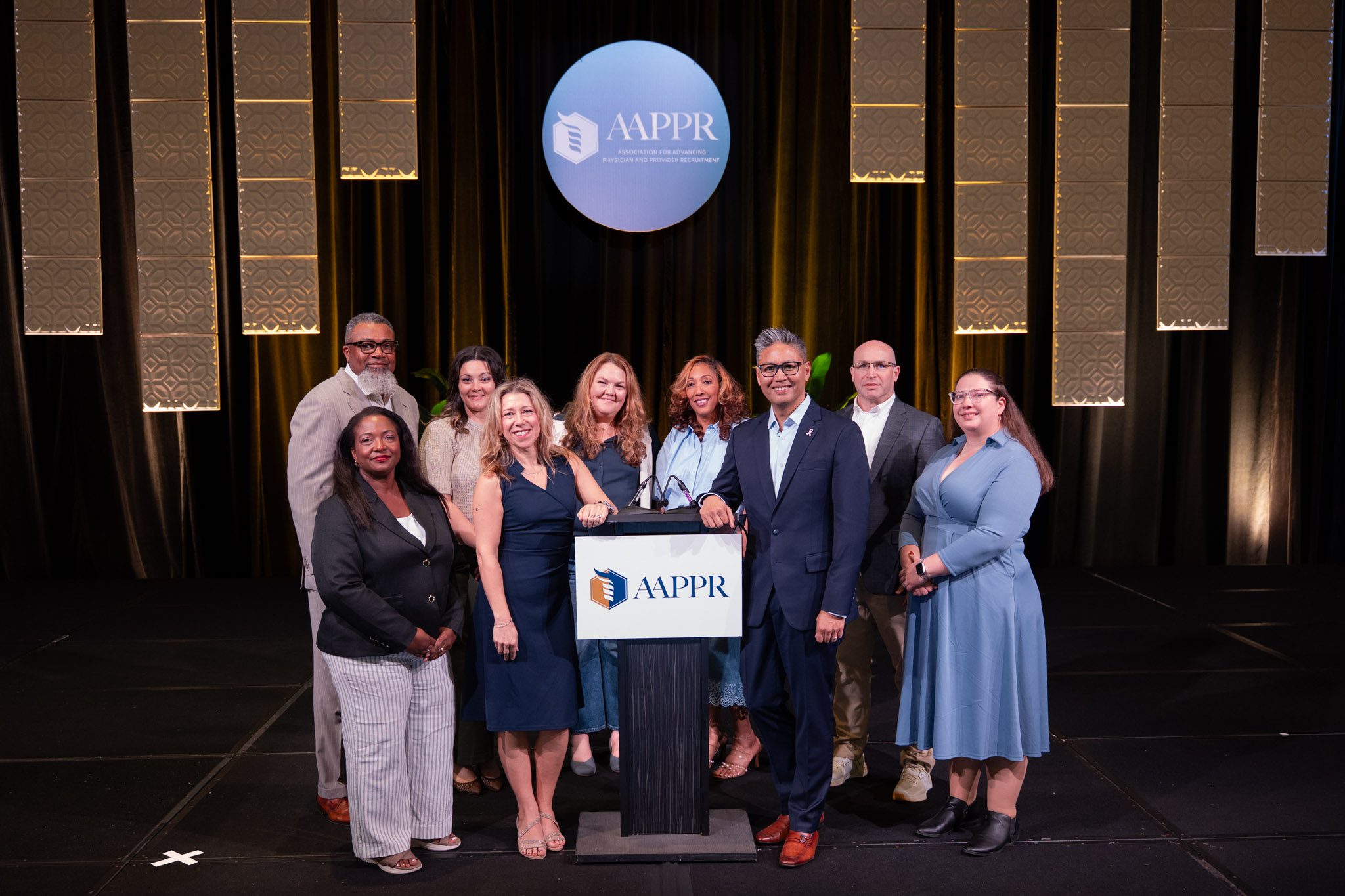
The Association for Advancing Physician and Provider Recruitment’s (AAPPR) is pleased to welcome three new board members, effective April 15, 2026. With their guidance, the organization will continue to bring innovative solutions and resources to advance the physician and provider recruitment profession. The 2026-2027 Board of Directors brings together a wealth of leadership and expertise that positions AAPPR for success.
Marcia Anderson, MHA, CPRP is a Physician Recruiter at WellSpan Health, where she supports full-scope physician and provider recruitment for a multi-facility health system dedicated to advancing community health across Central Pennsylvania.
With more than 25 years of experience in healthcare and over six years in comprehensive physician recruitment, Marcia brings a strategic blend of operational expertise, workforce planning, and mission-driven leadership. She is a Belonging Champion with a strong commitment to health equity. Her professional background is deeply rooted in women’s and children’s health, advocacy, and health equity, including extensive work addressing maternal and infant health disparities—particularly those impacting Black and Brown women. This perspective informs her approach to recruitment strategy, physician engagement, and sustainable workforce development.
Marcia earned a bachelor’s degree in business and a master’s degree in healthcare administration. She also holds the Registered Medical Manager (RMM) and Certified Physician Recruiter Professional (CPRP) credentials. She remains actively engaged in professional development, leadership, and community-centered initiatives. Selected for membership in the National Coalition of 100 Black Women in 2018, she remains an active member of Zeta Phi Beta Sorority, Incorporated and maintains professional memberships with Toastmasters International, MLAW, and the National Association of Parliamentarians. Throughout her service, she has held organizational leadership roles, chaired committees, and led fundraising, governance, and community-focused initiatives. She is also deeply engaged with AAPPR as a volunteer, mentor, presenter, and CPRP faculty member, contributing to education, micro-credentialing, and professional development within the physician recruitment community.
Marcia is adept at simplifying complex decision-making, strengthening bylaws and risk-management practices, and ensuring board and committee work aligns with mission and strategic priorities. Her combined expertise in physician recruitment, governance knowledge, advocacy experience, and commitment to health equity positions her to add disciplined, inclusive, and impact-focused leadership in board service.
Collin McKahin, MBA, CMSR, is the Director of Recruiting at Marvin Behavioral Health, a single-specialty organization that provides clinical mental health support to healthcare providers across the country. Previous to Marvin, Collin served with Tenet in CA; where he led physician, executive, and allied health recruitment across markets throughout the Central Valley of CA. Collin has also served as the Director of Business Development for Dignity Health (now part of CommonSpirit) in Sacramento and led many recruitment efforts into independent practices in the community and supported efforts with recruitment into the medical foundation for Dignity.
With 15 years of experience in healthcare recruitment, Collin is recognized for building creative, nontraditional pipelines and mentoring recruiters to grow into high-performing professionals who advance within their organizations. His work spans in-house and advisory roles, giving him a broad view of workforce dynamics, compensation variation, and the practical impact of organizational strategy on recruitment outcomes.
Collin has served on the Cristo Rey Board in Sacramento, supporting college-preparatory education for students of undocumented and low-income backgrounds, and has held advisory responsibilities for early-stage healthcare ventures focused on innovative care delivery. He is an active AAPPR contributor, speaking at national conferences, engaging in online forums, and sharing insights on recruiter development and clinician well-being.
Known as a long-term, systems-oriented thinker, Collin challenges assumptions, raises ethical considerations, and works across diverse stakeholder groups to solve complex problems. His experience navigating community boards, organizational politics, and emerging technologies such as AI equips him to bring practical, future-focused governance and candid, values-based perspective to board deliberations. Collin earned his Marketing Degree at Bradley University in Peoria IL, and his MBA at the University of Illinois, Springfield Campus.
Amber Williams, MPH, CPRP, serves as Director of Physician and Provider Recruitment at UNC Health, where she leads strategies to attract and retain clinical talent across a large, mission-driven academic health system.
With 11 years in the field and a Master of Public Health, Amber has built her career in recruitment from coordinator to director, gaining deep operational knowledge of how talent acquisition supports organizational performance and patient care. She is an active member of AAPPR, holds the CPRP certification, and contributes to course development and mentorship programs that elevate standards for in-house recruitment professionals.
Amber recently completed a two-year board term with Launch Holly Springs, where she also chaired the events committee and designed programs and engagement opportunities to support emerging small business leaders. She is a member of the American College of Healthcare Executives (TENC-NC chapter) and is known for her integrity, emotional intelligence, and ability to make thoughtful, future-focused decisions in complex environments.
Passionate about connecting people and advancing equity, Amber brings strengths in relationship-building, collaboration, and strategic thinking that translate directly to effective board service. She describes herself as a lifelong learner, resilient and patient leader, and authentic voice for operational perspectives in policy and strategic planning conversations.
As we welcome our new board members, President Allan Cacanindin shares his perspective on the future and continued growth of AAPPR.
Healthcare access begins long before a patient enters an exam room. It begins with courageous leaders willing to build the workforce of the future. These board members represent the very best of physician and provider recruitment — mission-driven professionals advancing innovation, culture, and access to care in communities across America.
At a time when healthcare organizations nationwide are facing historic workforce challenges, leaders like these remind us that physician and provider recruitment is not transactional work — it is strategic, human-centered leadership that directly shapes patient access, organizational stability, and the future of care delivery.
Behind every thriving health system is a workforce strategy strong enough to sustain it. The physician and provider recruitment profession has become one of healthcare’s most important strategic levers, and these leaders are helping guide that future with integrity, innovation, and purpose.
In every corner of the country, physician and provider recruitment leaders are helping determine whether patients receive timely access to care. That responsibility demands vision, resilience, and humanity. I’m proud to serve alongside leaders who are helping shape the future of healthcare workforce strategy nationwide.


Hear from AAPPR board members on why your experience matters and how participating in the compensation and search surveys helps create the benchmarking insight recruitment leaders need.
In physician and provider recruitment, leaders are being asked to make important decisions in an environment that continues to shift. Search timelines are changing, staffing needs remain high, compensation expectations are evolving and recruitment teams are being asked to show strategic value in ways that go beyond placements alone. That is why benchmarking data matters.
AAPPR’s Recruitment Team Compensation Survey and the Physician and Provider Search Survey help turn day-to-day recruitment experience into a clearer picture of what is happening across the field. The result is an annual Physician and Provider Recruitment Benchmarking Report to help leaders evaluate performance, compare trends and make more informed decisions about strategy, staffing and operations. But that insight is only as strong as the participation behind it.
The value of the report comes directly from the people who contribute to it – YOU! When recruitment leaders complete the surveys, they are not just reporting numbers – they are helping create the data leadership needs right now.

— Carol Sullivan, CPRP – AAPPR Board Member & Senior Director of Physician, Advanced Practice Provider, and Executive Physician Recruitment at Rochester Regional Health
Every organization that contributes helps create a more complete view of the physician and provider recruitment landscape. That matters because recruitment leaders need data that reflects real operational conditions, not assumptions.
When participation is strong, the benchmarking report becomes more meaningful for everyone. Leaders can better understand how their teams compare with peers, where market realities are shifting and what trends may be shaping recruitment performance across the country.
By contributing to the surveys, members help build a shared resource that strengthens decision-making across the profession.
— Allan Cacanindin CPRP, CDR – AAPPR Board President & Vice President of Physician, Advanced Practice Provider, and Executive Talent Acquisition at SSM Health
Participation does more than strengthen the report. It strengthens the quality of the decisions leaders can make with it.
Recruitment leaders are often asked to explain timelines, justify staffing models, evaluate sourcing strategies and advocate for team resources. Those conversations become more productive when they are grounded in credible, field-informed data. Benchmarking gives leaders the ability to move beyond isolated experience and see their work in the context of broader industry patterns.
That perspective helps organizations better understand what is realistic, what is competitive and where there may be opportunities to improve.
— Logan M. Ebbets, MS, CPRP – AAPPR Board Treasurer & Principal Recruiter at Signify Health
Metrics such as time-to-fill, recruiter productivity, candidate pipeline activity and recruiter capacity become far more useful when leaders can compare them against national benchmarks. That baseline helps organizations set more realistic expectations, especially for difficult searches and evolving market conditions.
It also helps leaders move conversations beyond anecdotal feedback and toward a clearer, more strategic understanding of performance.
— Fayeann Hauer, MHS, CPRP – AAPPR Board Member & Director of Physician and Provider Recruitment and Retention at Schneck Medical Center
Benchmarking data is not just useful for assessment. It is also essential for advocacy.
Recruitment leaders often need to make the case for staffing support, fair compensation and operational improvements that strengthen team performance. Objective benchmarking data helps validate those needs in a way that internal observations alone often cannot.
It also helps leaders identify areas where their teams may need additional support, whether that means adjusting workloads, refining processes or ensuring compensation aligns with the broader market.
— Doug Lewis, MS, CPRP – AAPPR Board Secretary & Vice President of Talent Acquisition at Sentara
When leaders have stronger data, they are better positioned to improve recruitment strategies, allocate resources more effectively and demonstrate the value of talent acquisition to executive leadership. Those improvements can strengthen recruitment infrastructure and help organizations remain competitive in attracting and retaining physician and provider talent.
In a field where strong recruitment directly affects workforce stability and patient access, that kind of clarity matters.
AAPPR’s benchmarking reports are valuable because they are built from the lived experience of physician and provider recruitment professionals. The more leaders who participate, the more useful, representative and actionable the data becomes.
If you have ever used data to explain a difficult search, advocate for more resources, assess compensation or evaluate team performance, you already understand why benchmarking matters. Participating in the Recruitment Team Compensation Survey and the Physician and Provider Search Survey is an opportunity to strengthen that resource for your organization and for the broader recruitment community.
Although the window to participate in the 2026 Recruitment Team Compensation Survey has closed, there is still time to participate in the 2026 Physician and Provider Recruitment Survey, closing May 19, 2026.
To learn more about the Benchmarking Report or view last year’s report, please visit our Benchmarking web page. Not a member, but want to be a part of this industry-changing report? Join now.

Congress is back in session after a two week recess with attention turning to a potential reconciliation bill to fund the Department of Homeland Security, and activity on the FY 2027 budget in full swing. As we celebrate Physician and Provider Recruitment Week, we want to take a moment to thank you for your hard work and dedication to upholding patient access.
AAPPR joined over 40 national medical associations and patient advocacy groups this month as cosigners of a coalition letter in support of H.R. 7961, the H-1Bs for Physicians and the Healthcare Workforce Act. The bipartisan legislation is in response to the Trump Administration’s September 2025 proclamation imposing a $100,000 fee on each new H-1B visa application, which is disproportionately harming the healthcare industry.
The H-1Bs for Physicians and the Healthcare Workforce Act would exempt physicians and other health professionals from the new $100,000 H-1B fee, ensuring employers can continue to fill critical access gaps. The legislation drew international attention, from the New York Times to the Times of India, highlighting the urgency around this issue. AAPPR thanks Reps. Mike Lawler (R-NY), Sanford D. Bishop, Jr. (D-GA), Maria Elvira Salazar (R-FL), and Yvette Clarke (D-NY) for their leadership on this issue.
New legislation impacting locum tenens was just introduced in the House. H.R. 8347, the “Reinforcing Underserved, Rural, and Local Healthcare Act” (the “RURAL Healthcare Act”), would create a clear federal rule that certain temporary locum tenens physicians and advanced care practitioners (meeting conditions including a written contract and a limit of no more than one continuous year at a single site) are treated as independent contractors, not employees, under federal pay-and-overtime laws and federal labor/union rules.
This proposal follows the “Health Care Provider Shortage Minimization Act” approach, which would amend the Internal Revenue Code to clarify that qualifying locum tenens physicians and advanced care practitioners are treated as independent contractors for federal tax purposes.
Taken together, the bills aim to provide clearer federal rules for when locum tenens clinicians can be treated as independent contractors.
AAPPR continues to partner with stakeholders across our federal priorities and will be sharing more resources on AAPPR’s website in the coming weeks. Be sure to take a look and let us know if you have any questions!


As the healthcare workforce landscape continues to evolve in 2026, in-house physician and provider recruitment professionals are carrying a larger load than ever. The demand for care remains high, yet the path to hiring and retaining clinicians has grown more complex. Last year brought new pressures from policy shifts, locums competition and compensation expectations, and it demanded more creativity and stamina from already stretched teams.
Candidates are in the driver’s seat and their expectations have shifted. Early-career physicians and advanced practice providers increasingly ask for four-day workweeks at full-time pay, part-time options and paid time off and candidates are willing to decline offers when their schedule preference can’t be accommodated.
More seasoned providers are putting greater emphasis on work-life balance and culture. Many are open to trading some compensation or additional shifts for more control over their schedules and more time away from clinical practice.
Across specialties, AAPPR members are seeing longer decision timelines, more extensive negotiations and more frequent use of attorneys to review contracts. Hard-to-recruit areas such as hospital medicine, women’s health, oncology, GI, urology, anesthesiology and radiology, remain under heavy pressure, particularly where locums rates far outpace compensation for permanent roles.
Policy and regulatory changes around loans, visas, graduate medical education and licensure continue to add complexity where these shifts could constrain the long-term pipeline, especially for candidates who rely on loans or immigration pathways.
With that in mind, success focuses less on filling every opening quickly and more on building a sustainable, resilient workforce strategy. That direction includes:
As recruitment challenges continue to evolve, organizations can shift from reactive hiring to more deliberate, long-term workforce planning. The strategies below highlight where focused effort can make the greatest impact.
Compensation models faced real pressure in 2025. Candidates often wanted larger up-front payments, longer guarantees and faster access to bonus funds. Some organizations attempted these changes and then reversed course after candidates withdrew or guarantees exceeded what volumes could support. The lesson is clear: recruitment leaders must explain total compensation, not just base salary or sign-on dollars, so candidates understand how guarantees, productivity, incentives and benefits fit together. It is important to set expectations about what happens after guarantees end, since short-term payouts can create long-term disappointment if productivity is not there.
With compensation becoming more competitive across markets, relationships are a key differentiator. Acceptance rates improve when leaders and potential colleagues engage early, when communication is timely and candid, and when candidates can picture daily life in the role. Inside organizations, sharing each signed contract with leaders can demonstrate recruitment’s strategic value and reinforce team morale.
The complexity of the current market makes internal alignment more important than ever. It costs time and revenue when recruiters juggle inconsistent and varied processes across the enterprise, when decisions are made without their input or when handoffs across teams are unclear. Bringing recruitment leaders into higher-level discussions can ensure plans reflect real market conditions, and consistent processes can reduce confusion for candidates and internal partners.
Teams that track more than days-to-fill are better equipped to drive change. Metrics on decision timelines, decline reasons and negotiation trends help recruitment leaders make stronger cases for updated compensation structures or garnering support for process improvements. When paired with external benchmarks, this data gives organizations a clearer, more realistic view of what to target today.
As organizations navigate the year ahead, this is a good time to review your internal processes, reconnect with your peers and use AAPPR’s research and resources to guide next steps. Together, we can help strengthen the recruitment profession and build a more resilient workforce.

Physician and provider recruitment is a profession built on relationships. Every search, every successful placement, and every retained provider begins with a connection. But while recruiters spend much of their time building relationships with candidates and organizations, one of the most valuable connections we can make is with each other.
The Association for Advancing Physician and Provider Recruitment (AAPPR) has created a community where recruiters are not competitors, but collaborators. Within this network, professionals share strategies, celebrate wins, troubleshoot challenges, and continuously push the profession forward. In a field that can often feel fast-paced and high-pressure, having a supportive network of peers who understand the complexities of recruitment is invaluable.
Networking with fellow AAPPR members has the power to strengthen recruitment strategies in ways that simply cannot be achieved alone. Conversations with peers often spark new ideas—whether it’s a creative approach to sourcing candidates, innovative onboarding practices, or retention strategies that support long-term workforce stability. Learning how others navigate rural recruitment challenges, specialty shortages, or evolving workforce expectations can immediately impact how we serve our organizations and communities.
Opportunities like the AAPPR Annual Conference and PPRP Week provide powerful spaces for these connections to flourish. The Annual Conference brings together recruitment professionals from across the country to share insights, explore new tools, and learn from industry leaders. The conversations in breakout sessions, hallway discussions, and networking events often become the ideas that transform recruitment programs back home.
Similarly, PPRP Week offers a chance to celebrate the work of physician and provider recruiters while highlighting the impact this profession has on healthcare access. It’s a moment to recognize that behind every provider hired is a recruiter working tirelessly to ensure communities receive the care they need.
Personally, this community has had a profound impact on my professional journey. In April of 2026, my six years of service on the AAPPR Board of Directors will come to an end. It has truly been an honor to serve an organization that has given so much to me and has played a meaningful role in shaping me as a recruitment professional. The mentors, colleagues, and friends I have gained through AAPPR have strengthened not only my work, but my passion for this field.
At its core, physician and provider recruitment is about building the healthcare workforce of tomorrow. Through connection, collaboration, and community, AAPPR ensures that none of us have to do that work alone.


Every March, Match Week and Match Day shine a spotlight on the future of medicine. For medical students, it marks the culmination of years of hard work and the training years ahead. In 2025, the Match was the largest in the National Resident Matching Program’s history, with 43,237 positions offered. It was an important milestone, and one worth celebrating.
But for physician and provider recruitment leaders, Match Day should also prompt a bigger question: is the system creating enough training opportunities to meet workforce needs in the years ahead? Matching into residency is a major step, but it is only one step in the physician pipeline. If there are not enough residency positions, or if those positions are not located in the specialties and communities where need is greatest, shortages will continue to affect both recruitment efforts and access to care.
Graduate medical education (GME) is the bridge between medical school and independent practice. Federal policy plays a major role in determining how many residency slots are available, which means policy decisions directly shape how many physicians can move through the pipeline and into practice.
This has been a challenge for years. The Balanced Budget Act of 1997 capped the number of Medicare-funded residency positions, and although some additional slots have been added in recent years, growth has not kept pace with need. At the same time, medical school enrollment has grown by more than 35% since 2002. The result is a bottleneck at one of the most important stages of physician training.
This challenge is not only about the total number of physicians entering the workforce. It is also about where those physicians train and where they ultimately practice.
Primary care remains one of the clearest pressure points, with psychiatry and some surgical specialties also facing growing strain. Rural and underserved communities are especially affected, where shortages are often more severe and recruitment is already more difficult. These communities should be central to the story, not a side note.
Where physicians train matters, too. Residency location is often a strong predictor of where physicians ultimately practice. That means residency slot policy has a direct impact not only on the size of the workforce, but also on whether high-need communities gain access to care.
For physician and provider recruiters, this challenge is not abstract. It shows up in longer searches, more competition for the same candidates and persistent difficulty filling roles in high-need specialties and markets.
It also comes at a time when demand for care is rising and much of the current physician workforce is nearing retirement age. By 2036, the population age 65 and older is projected to grow by 34%, while 20% of today’s clinical physician workforce is already 65 or older and another 22% is between 55 and 64. In other words, recruitment teams are feeling the effects of both a constrained pipeline and an aging workforce at the same time.
That broader context matters. Recruitment leaders may not control federal policy, but they are often among the first to feel its impact.
AAPPR is paying close attention to this issue because GME policy has a direct effect on physician recruitment and access to care. AAPPR has supported federal efforts to expand residency training, including legislation designed to add Medicare-supported GME positions and strengthen rural residency programs.
This is also an area where members’ voices matter. Physician and provider recruiters bring an important perspective to the conversation because they see, every day, what happens when physician supply does not keep pace with patient need. Their experience helps connect policy decisions to the real-world challenges facing healthcare organizations and the communities they serve.
Match Day will always be an important milestone as it represents the promise of a new generation of physicians entering training, but it should also serve as a reminder that strengthening the physician workforce requires more than successful matches. It requires enough residency capacity, smart distribution of training opportunities and continued investment in the communities that need physicians most.
For AAPPR members, that makes GME policy more than a policy issue. It is a workforce issue, a recruitment issue and, ultimately, an access issue. AAPPR will continue following and advocating on the policy decisions that shape the physician pipeline and the future of physician and provider recruitment.

Last Updated: March 23, 2026
As we covered in the March Legislative Update, after several bipartisan letters from Congress regarding exempting health care workers from the $100,000 H-1B fee, AAPPR worked alongside national medical organizations, including the American Medical Association and American Hospital Association, to secure the bipartisan introduction of the H-1Bs for Physicians and the Healthcare Workforce Act.
We applaud Reps. Mike Lawler (R-NY), Sanford D. Bishop, Jr. (D-GA), Maria Elvira Salazar (R-FL), and Yvette Clarke (D-NY) for their leadership on this important bipartisan effort.
The legislation would exempt all physicians and other healthcare workers from the new $100,000 H-1B filing fee upon enactment. The legislation defines “healthcare worker” to include, but not be limited to, physicians, nurses, nurse practitioners, primary care providers, preventive medicine physicians, optometrists, ophthalmologists, physician assistants, pharmacists, dentists, dental hygienists, other oral healthcare professionals, and other allied health professionals.
Under the Presidential Proclamation, the Secretary of the Department of Homeland Security (DHS) has the authority to exempt certain individuals, or entire professions, when it is in the national interest. Unfortunately, no physicians or other healthcare workers have been granted exemptions to date.
By introducing this legislation, we are hopeful Congressional support will coalesce around this bill and demonstrate to the Administration that exempting healthcare workers is in the national interest and does not undermine the broader policy goals of the Administration. We are encouraging Members of Congress to cosponsor the legislation. Please reach out if you have any questions.
Outside of this legislative effort, we await an update in the Global Nurse Force litigation. During a hearing last month on a motion for preliminary injunction, the government argued that the new fee is not a tax, while the plaintiffs argued that Congress authorized immigration fees only to cover the costs of administering the programs. We expect an update in the next few weeks.
You can read our previous updates from October 28, 2025, December 22, 2025, and Janurary 6, 2026.
AAPPR is aware and closely following the hold on HHS Clinical Waivers and its impact on physician recruitment. The HHS Exchange Visitor Program allows foreign-trained physicians on J-1 visas to remain in the United States without returning to their home country for two years, provided they agree to serve in underserved areas. Since fall 2025, the Office of Global Affairs (OGA) at HHS, which is responsible for issuing the recommendation letters necessary to advance waiver applications, paused the process with hundreds of cases now in the backlog. HHS has reportedly stated that changes are being made to the criteria for the clinical waiver program, but no timing for those changes has been shared.
The consequences of this freeze are serious and far-reaching. The waiver process operates on a tight timeline and physicians generally must have their recommendations forwarded to the State Department by mid-March to complete the transition to H-1B status by the typical July 1 start date. It is not clear if physicians whose J-1 status expires before their waiver is processed will have to leave the country, further disrupting their path to employment.
Given the severity of this issue, we are engaging congressional offices to share our concerns with the Administration and urge immediate action to resume processing. If you are experiencing these delays or have any follow-up questions, please reach out and let us know.

Get up to speed on the latest issues AAPPR is tracking on Capitol Hill, from H-1B visa fee developments to changes to student loan rules. The confirmation of a new Department of Homeland Security Secretary presents a unique opportunity to raise concerns surrounding the H-1B fee, and the FY27 appropriations process should also highlight health workforce challenges and funding questions. AAPPR is engaged with numerous bipartisan offices to elevate key priority issues, which you can read more about in this month’s update.
The Trump Administration’s $100,000 H-1B visa fee remains in effect and continues to pose recruitment challenges for healthcare organizations seeking international physicians and other providers. We appreciate you reaching out to share your experience navigating the fee, including the unfortunate reality of pausing recruitment of candidates who would require payment of the H-1B fee. This feedback helps us advocate for policies that matter to you, including an exemption for healthcare workers from the $100,000 H-1B fee.
AAPPR has been working alongside national health stakeholder groups and a bipartisan group of lawmakers to secure introduction of the H-1Bs for Physicians and the Healthcare Workforce Act. The bill would exempt all physicians and other healthcare workers from the new $100,000 H-1B filing fee upon enactment. The legislation defines “healthcare worker” to include, but not be limited to, physicians, nurses, nurse practitioners, primary care providers, preventive medicine physicians, optometrists, ophthalmologists, physician assistants, pharmacists, dentists, dental hygienists, other oral healthcare professionals, and other allied health professionals. We are hopeful that this bipartisan legislation sends a clear message from Congress about the need to exempt healthcare workers from the fee. AAPPRS thanks Reps. Mike Lawler (R-NY), Bishop (D-GA), Salazar (R-FL), and Clarke (D-NY) for leading this important bipartisan effort.
For more details on the legislation, click here.
On the litigation front, we are awaiting an update in the Global Nurse Force case. During a hearing last month on a motion for preliminary injunction, the government argued that the new fee is not a tax, while the plaintiffs argued that Congress authorized immigration fees only to cover the costs of administering the programs. We expect an update in the coming weeks.
On February 3, 2026, the Department of Education published a proposed rule implementing student loan provisions of the One Big Beautiful Bill Act (OBBB), with significant implications for the nursing workforce pipeline. The proposed rule explicitly excludes Master of Science in Nursing (MSN) and Doctor of Nursing Practice (DNP) degrees from the definition of “professional degree,” meaning nursing students will be subject to the lower graduate student loan limits: $20,500 annually and $100,000 in aggregate, rather than the $50,000 annual and $200,000 aggregate limits available to medical, dental, and other professional students. This classification change will reduce federal loan access for advanced practice nursing students and other providers.
On March 2, 2026, AAPPR submitted a comment letter expressing concerns about the proposed rule’s adverse effect on the healthcare workforce pipeline. In comments, AAPPR urged the Department to adopt a broad, inclusive definition of “professional student” that encompasses advanced nursing degrees alongside other allied health programs, warning that the reclassification could reduce the number of advanced practice providers entering the workforce and intensify the recruitment competition that hospitals and health systems already face. The new rules are expected to take effect July 1, 2026. Please stay tuned for more updates.
AAPPR has signed on in support of the Rural Residency Planning and Development Act of 2025 (H.R. 6468), joining a broad coalition of healthcare organizations urging Congress to authorize dedicated funding for the Rural Residency Planning and Development (RRPD) pilot program. Since its launch in 2019, the RRPD program has worked to address persistent physician shortages in rural communities by supporting the creation and sustainability of rural residency programs, including funding for start-up costs, accreditation, faculty development, and recruitment.
This would ensure the continuity and expansion of the program, strengthening the long-term sustainability of healthcare access in rural areas across the nation.
The next few weeks are going to be tumultuous on Capitol Hill. There are positive signs of movement on issues important to AAPPR and all of you, but they are caught between debates on issues garnering national attention. Stay tuned for updates on the H-1B visa, the Conrad 30 program, and other policy-related items between now and the Advancing Connections 2026 AAPPR Conference next month!

Since 2011, we have asked our members each year to participate in two surveys, the Recruitment Team Compensation Survey and the Physician and Provider Search Survey, that directly power our annual Physician and Provider Recruitment Benchmarking Report. These surveys are not standalone exercises. The data collected becomes the foundation for the benchmarking insights members use to evaluate compensation, assess workload and performance, and support strategic conversations with organizational leadership.
Participation is what ensures the Benchmarking Report reflects the realities recruitment teams are navigating today. When participation is broad and consistent, the data is stronger, more representative and more useful for decision-making across the profession.
Participation for the 2026 Benchmarking Surveys is now underway. The Recruitment Team Compensation Survey opened on February 10, 2026 and the Physician and Provider Search Survey opens March 17, 2026.

Here are five reasons why member organizations should participate in the surveys:
The quality and usefulness of the Benchmarking Report depends entirely on the breadth and accuracy of member participation.
When organizations of varying sizes, regions and structures contribute data, the resulting benchmarks better reflect the realities of today’s recruitment environment. Participation ensures the data captures meaningful variation rather than a limited snapshot, making the benchmarks more reliable for real-world decision-making.
Participation is not just about contributing data. Organizations that complete the surveys receive complimentary access to the corresponding Benchmarking Report and the Benchmarking Portal.
These resources allow members to explore detailed tables, compare results and use tools and calculators to analyze their own data against industry benchmarks. Participation ensures members can immediately apply the insights to compensation planning, workload assessment and operational strategy.
Benchmarking data provides external context that recruitment leaders need when engaging with finance, HR and executive stakeholders.
The data generated through these surveys supports:
• Compensation and role design discussions
• Budget and headcount planning
• Goal setting and performance evaluation
• Forecasting future recruitment needs
Participation strengthens the credibility of these conversations by ensuring the benchmarks reflect current market conditions.
Each survey answers a different set of strategic questions.
The Recruitment Team Compensation Survey focuses on the people behind recruitment operations, including roles, responsibilities and compensation structures.
The Physician and Provider Search Survey focuses on recruitment activity and outcomes, including search volume, demand trends and performance metrics.
Participation in both surveys helps create a comprehensive picture of how recruitment teams are structured and how effectively they operate.
Our Benchmarking Report is a shared resource built by members, for members. Broad participation ensures the data remains relevant over time and continues to evolve alongside the profession.
By contributing to the surveys, members help establish benchmarks that support best practices, inform workforce planning and advance physician and provider recruitment as a whole.
Industry-wide participation strengthens the accuracy and impact of AAPPR’s benchmarking data—making it a trusted resource for physician and provider recruitment teams everywhere. Both AAPPR members and nonmembers are welcome to participate in the Recruitment Team Compensation Survey (opened February 10) and the Physician and Provider Search Survey (opening March 17).
As a thank-you, all survey participants will receive a free copy of the report for the survey they completed.
To learn more about the Benchmarking Report, please visit aappr.org/research/benchmarking.

We are roughly six weeks into the year and Congress has spent more time finishing 2025 than laying the groundwork for 2026. Still, there’s a lot of activity impacting the physician pipeline and health care employers. We expect the year to take shape in the coming weeks as Congress returns from its recess, the President delivers his State of the Union, and the next appropriations cycle gets underway. We continue to work with stakeholders and Congressional offices to elevate key issues like H-1B visa fees, Conrad 30 improvements, and other administrative actions impacting healthcare costs and delivery.
The Trump Administration’s $100,000 H-1B visa fee, implemented in September 2025, remains in effect and continues to pose recruitment challenges for healthcare organizations seeking international physicians and providers. While the administration has indicated it may consider national interest exemptions, no exemptions have been granted in the healthcare sector to date. Three federal lawsuits are currently pending, with a DC Circuit appeal expected this month following a December 2025 district court ruling that upheld the fee. On the legislative front, bipartisan congressional pressure is mounting: a letter led by Representatives Yvette Clark (D-NY) and Mike Lawler (R-NY) garnered 100 bipartisan signers and the support of 40 national healthcare organizations, including AAPPR, and new bipartisan legislation to exempt healthcare workers from the fee is expected ahead of the H-1B cap lottery registration.
Healthcare employers should closely monitor these legal and legislative developments, as favorable rulings or passage of an exemption could provide near-term relief. In the meantime, the Conrad 30 J-1 Visa Waiver Program remains a viable alternative pathway for physician recruitment, as international medical graduates transitioning from J-1 to H-1B status are not subject to this fee. We encourage you to assess recruitment timelines and consider engaging with congressional champions to educate them on the implications of this policy.
On February 3, 2026, the Department of Education published a proposed rule implementing student loan provisions of the One Big Beautiful Bill Act (OBBB), with significant implications for the nursing workforce pipeline. The proposed rule explicitly excludes Master of Science in Nursing (MSN) and Doctor of Nursing Practice (DNP) degrees from the definition of “professional degree,” meaning nursing students will be subject to the lower graduate student loan limits: $20,500 annually and $100,000 in aggregate, rather than the $50,000 annual and $200,000 aggregate limits available to medical, dental, and other professional students. The Department of Education justified this exclusion by reasoning that nurses are already licensed when entering these programs and that nurse practitioners in many states cannot practice independently without physician supervision.
This classification change, combined with the OBBB’s elimination of Graduate PLUS Loans for new borrowers effective July 1, 2026, will substantially reduce federal loan access for advanced practice nursing students. Healthcare organizations should be aware that this policy shift may create financial barriers to nursing education, potentially affecting the supply of nurse practitioners and other advanced practice nurses entering the workforce in coming years. Comments on the proposed rule are due by March 5, 2026. Please reach out if you have any questions.
If you or your organization are encountering challenges related to the H-1B visa fee, Conrad 30 program, or any other issues affecting your ability to recruit and retain physicians and providers, we want to hear from you. Please don’t hesitate to reach out as your insights help us make the case to policymakers and shape effective solutions.
AAPPR uses cookies for functional and analytical purposes. By continuing to browse or by clicking “Accept,” you agree to the storing of cookies on your device to enhance your site experience. To learn more about how we use cookies or how to change your settings, please see our privacy policy.
Accept Close