
Have a question?
Contact us
The Association for Advancing Physician and Provider Recruitment (AAPPR) is redefining recruitment to retention and is the only professional organization where physician and provider recruitment leaders and others who influence recruitment, onboarding and retention can connect, learn and advance their careers.
The most important investment you can make in a rapidly changing healthcare landscape is in yourself. I’ve been thinking about that a lot lately—not as a tagline, but as something I’ve had to genuinely remind myself of throughout my career in physician and provider recruitment. Having spent years in HR, immigration, and healthcare management before stepping fully into Clinician Recruitment, I’ve experienced firsthand just how quickly this landscape can shift.
There have been moments when I felt completely on top of my game—clear on strategy, confident in the room, grounded in the data. And there have also been moments—usually when the industry moved faster than I expected or when a peer introduced an approach I’d never encountered—when I had to ask myself: am I keeping up?
That tension isn’t a weakness. It’s a signal that you care about doing this work well—and it’s exactly what makes professional development essential.
Recruitment has never been static, but the pace and complexity of change today are something else entirely.
We are facing intensified competition for physician and advanced practice clinician (APP) talent, persistent financial pressures, and leadership turnover that require us to constantly rebuild relationships and reestablish trust. Increasingly, the ability to effectively recruit and retain both physicians and APPs has become a true differentiator for health systems—impacting access, care delivery models, and long-term sustainability.
For those of us in academic healthcare, the environment is even more complex.
Shifts in clinical reimbursement, cost containment pressures, and ongoing uncertainty around clinical research funding are shaping how organizations make hiring decisions. Academic institutions, in particular, are navigating difficult tradeoffs—balancing clinical productivity with research missions, aligning recruitment with funding realities, and making strategic choices about where to invest.
For Clinician recruitment professionals, that means our work sits at the intersection of competing priorities:
– Clinical demand vs. research investment
– Physician hiring vs. APP workforce optimization
– Growth goals vs. financial constraints
These dynamics influence not just how we recruit, but how we position opportunities, advise leaders, and guide candidates through increasingly complex decisions. Add in the continued evolution of AI and technology, and it becomes even clearer: the recruiter role today is not transactional. It is strategic.
When we talk about professional development, it’s easy to think in terms of certifications or continuing education credits. Those matter—but the real value is deeper.
When I’ve invested intentionally in my own development. The biggest shift wasn’t just knowledge. It was how I showed up. I became:
– Less reactive and more strategic
– Better able to connect workforce data, funding realities, and clinician needs
– More confident advising leadership—not just executing requests
This is especially important as clinician recruitment becomes central to organizational strategy. How we recruit and deploy physicians and APPs directly impacts access to care, financial performance, and the patient experience.
That shift from execution to influence is where career acceleration happens. And it’s built over time through consistent investment.
In my experience, growth happens most effectively in three areas:
The strongest recruiters anticipate change. Developing skills in workforce planning, data interpretation, and care model strategy allows you to lead conversations rather than react to them.
The most effective recruiters remain deeply curious—about compensation trends, specialty shortages, APP utilization, and evolving healthcare funding. That curiosity is what keeps you relevant and informed.
Whether leadership roles, committee involvement, or strategic initiatives—tend to go to those who have already invested in their growth. Preparation creates visibility.
One of the reasons I pursued board service is that I strongly believe in AAPPR’s strategic goal for the Clinician Recruitment Industry. The resources are practical, relevant, and directly aligned to the skills needed in today’s clinician recruitment environment. The CPRP credential provides a comprehensive framework grounded in AAPPR’s competency model. It strengthens your ability to navigate the full recruitment lifecycle—from sourcing to onboarding to retention—while elevating your credibility and confidence.
For many, the challenge isn’t understanding the value of professional development—it’s making space for it.
One way to approach this is to align development with organizational priorities. A strong recruitment function directly impacts:
– Days-to-fill for critical physician and APP roles
– Access to care and patient outcomes
– Provider retention and engagement
– Financial performance tied to clinician productivity
And it doesn’t have to start big. A webinar. A conversation. A mentorship cohort. Small, consistent steps matter. The challenges we’re facing—financial pressures, evolving care models, shifting research funding, and the growing importance of team-based care—are reshaping our profession. Those who will lead in this environment are the ones who continue to learn, stay curious, and invest in their own development. APPR gives us the tools, the community, and the structure to do exactly that. The next step is deciding to take advantage of it.
I’m grateful for what this organization has given me as both a professional and a leader. I hope you’ll lean into everything it offers—and I’d love to hear how you’re investing in your own growth. Let’s keep learning together.
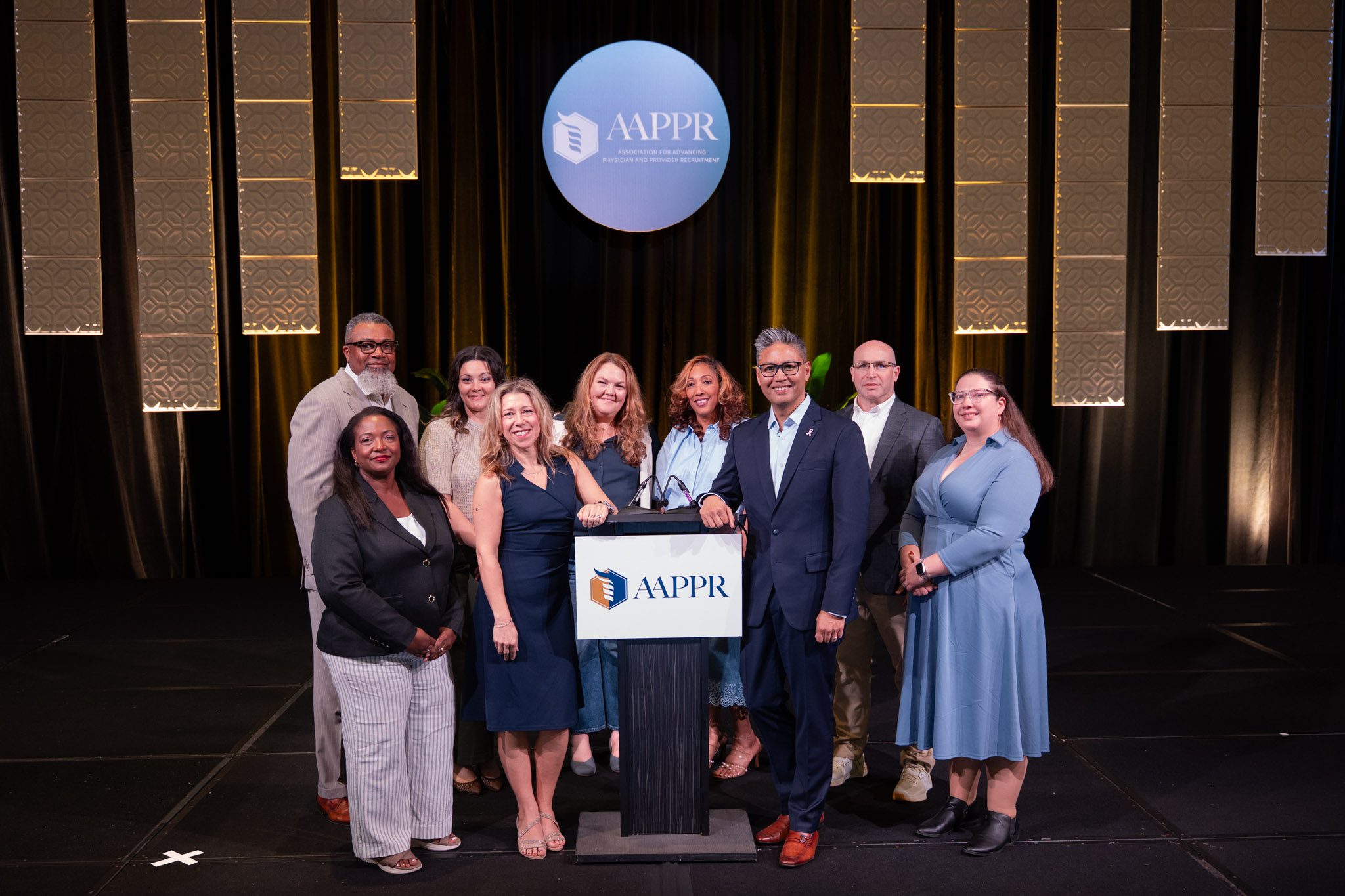
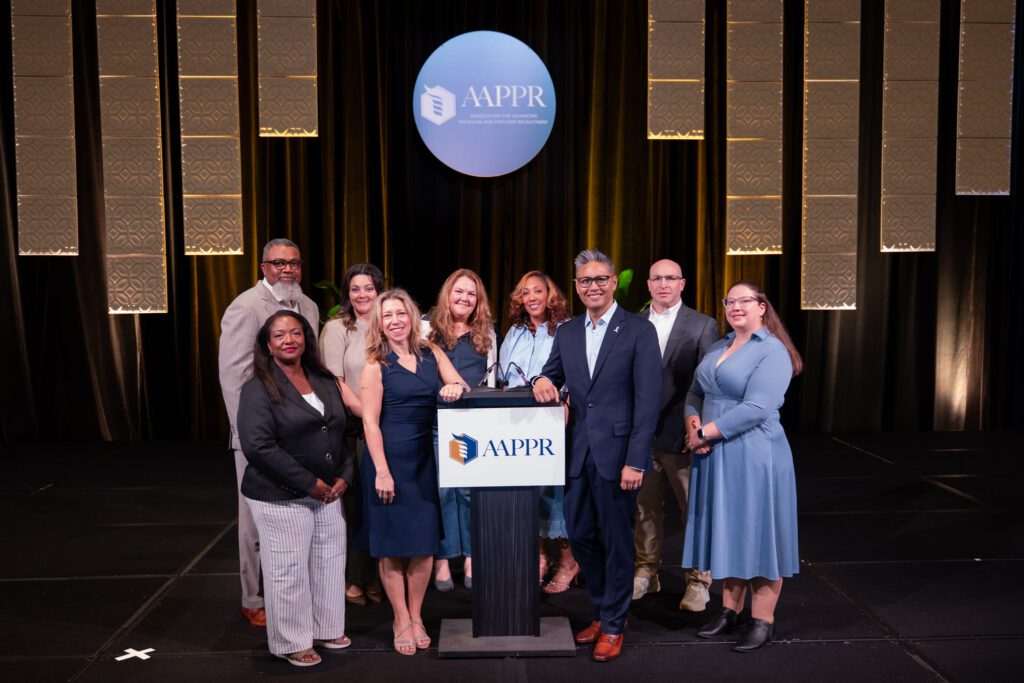
The Association for Advancing Physician and Provider Recruitment’s (AAPPR) is pleased to welcome three new board members, effective April 15, 2026. With their guidance, the organization will continue to bring innovative solutions and resources to advance the physician and provider recruitment profession. The 2026-2027 Board of Directors brings together a wealth of leadership and expertise that positions AAPPR for success.
Marcia Anderson, MHA, CPRP is a Physician Recruiter at WellSpan Health, where she supports full-scope physician and provider recruitment for a multi-facility health system dedicated to advancing community health across Central Pennsylvania.
With more than 25 years of experience in healthcare and over six years in comprehensive physician recruitment, Marcia brings a strategic blend of operational expertise, workforce planning, and mission-driven leadership. She is a Belonging Champion with a strong commitment to health equity. Her professional background is deeply rooted in women’s and children’s health, advocacy, and health equity, including extensive work addressing maternal and infant health disparities—particularly those impacting Black and Brown women. This perspective informs her approach to recruitment strategy, physician engagement, and sustainable workforce development.
Marcia earned a bachelor’s degree in business and a master’s degree in healthcare administration. She also holds the Registered Medical Manager (RMM) and Certified Physician Recruiter Professional (CPRP) credentials. She remains actively engaged in professional development, leadership, and community-centered initiatives. Selected for membership in the National Coalition of 100 Black Women in 2018, she remains an active member of Zeta Phi Beta Sorority, Incorporated and maintains professional memberships with Toastmasters International, MLAW, and the National Association of Parliamentarians. Throughout her service, she has held organizational leadership roles, chaired committees, and led fundraising, governance, and community-focused initiatives. She is also deeply engaged with AAPPR as a volunteer, mentor, presenter, and CPRP faculty member, contributing to education, micro-credentialing, and professional development within the physician recruitment community.
Marcia is adept at simplifying complex decision-making, strengthening bylaws and risk-management practices, and ensuring board and committee work aligns with mission and strategic priorities. Her combined expertise in physician recruitment, governance knowledge, advocacy experience, and commitment to health equity positions her to add disciplined, inclusive, and impact-focused leadership in board service.
Collin McKahin, MBA, CMSR, is the Director of Recruiting at Marvin Behavioral Health, a single-specialty organization that provides clinical mental health support to healthcare providers across the country. Previous to Marvin, Collin served with Tenet in CA; where he led physician, executive, and allied health recruitment across markets throughout the Central Valley of CA. Collin has also served as the Director of Business Development for Dignity Health (now part of CommonSpirit) in Sacramento and led many recruitment efforts into independent practices in the community and supported efforts with recruitment into the medical foundation for Dignity.
With 15 years of experience in healthcare recruitment, Collin is recognized for building creative, nontraditional pipelines and mentoring recruiters to grow into high-performing professionals who advance within their organizations. His work spans in-house and advisory roles, giving him a broad view of workforce dynamics, compensation variation, and the practical impact of organizational strategy on recruitment outcomes.
Collin has served on the Cristo Rey Board in Sacramento, supporting college-preparatory education for students of undocumented and low-income backgrounds, and has held advisory responsibilities for early-stage healthcare ventures focused on innovative care delivery. He is an active AAPPR contributor, speaking at national conferences, engaging in online forums, and sharing insights on recruiter development and clinician well-being.
Known as a long-term, systems-oriented thinker, Collin challenges assumptions, raises ethical considerations, and works across diverse stakeholder groups to solve complex problems. His experience navigating community boards, organizational politics, and emerging technologies such as AI equips him to bring practical, future-focused governance and candid, values-based perspective to board deliberations. Collin earned his Marketing Degree at Bradley University in Peoria IL, and his MBA at the University of Illinois, Springfield Campus.
Amber Williams, MPH, CPRP, serves as Director of Physician and Provider Recruitment at UNC Health, where she leads strategies to attract and retain clinical talent across a large, mission-driven academic health system.
With 11 years in the field and a Master of Public Health, Amber has built her career in recruitment from coordinator to director, gaining deep operational knowledge of how talent acquisition supports organizational performance and patient care. She is an active member of AAPPR, holds the CPRP certification, and contributes to course development and mentorship programs that elevate standards for in-house recruitment professionals.
Amber recently completed a two-year board term with Launch Holly Springs, where she also chaired the events committee and designed programs and engagement opportunities to support emerging small business leaders. She is a member of the American College of Healthcare Executives (TENC-NC chapter) and is known for her integrity, emotional intelligence, and ability to make thoughtful, future-focused decisions in complex environments.
Passionate about connecting people and advancing equity, Amber brings strengths in relationship-building, collaboration, and strategic thinking that translate directly to effective board service. She describes herself as a lifelong learner, resilient and patient leader, and authentic voice for operational perspectives in policy and strategic planning conversations.
As we welcome our new board members, President Allan Cacanindin shares his perspective on the future and continued growth of AAPPR.
Healthcare access begins long before a patient enters an exam room. It begins with courageous leaders willing to build the workforce of the future. These board members represent the very best of physician and provider recruitment — mission-driven professionals advancing innovation, culture, and access to care in communities across America.
At a time when healthcare organizations nationwide are facing historic workforce challenges, leaders like these remind us that physician and provider recruitment is not transactional work — it is strategic, human-centered leadership that directly shapes patient access, organizational stability, and the future of care delivery.
Behind every thriving health system is a workforce strategy strong enough to sustain it. The physician and provider recruitment profession has become one of healthcare’s most important strategic levers, and these leaders are helping guide that future with integrity, innovation, and purpose.
In every corner of the country, physician and provider recruitment leaders are helping determine whether patients receive timely access to care. That responsibility demands vision, resilience, and humanity. I’m proud to serve alongside leaders who are helping shape the future of healthcare workforce strategy nationwide.
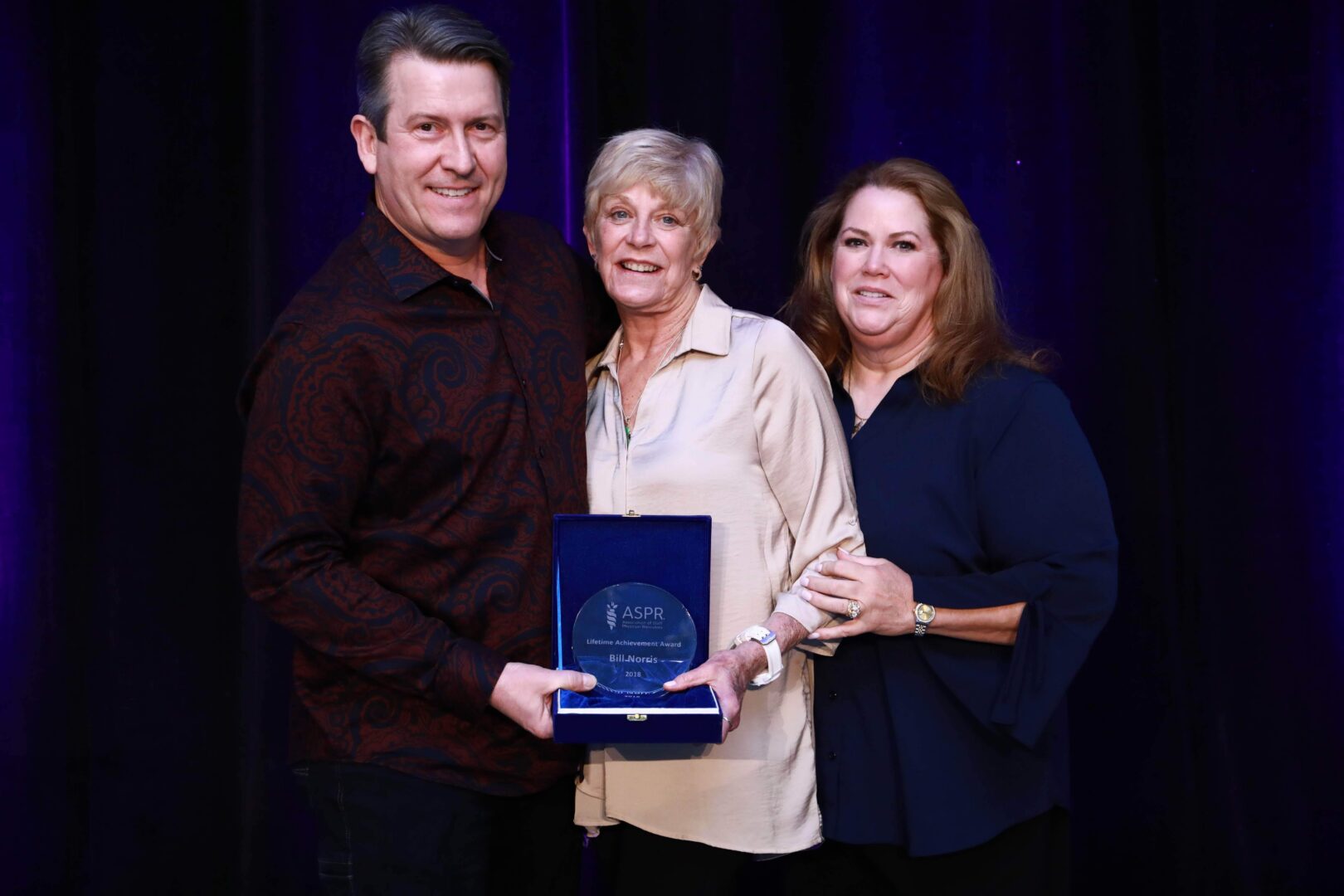
Physician and provider recruitment is a profession built on relationships. Every search, every successful placement, and every retained provider begins with a connection. But while recruiters spend much of their time building relationships with candidates and organizations, one of the most valuable connections we can make is with each other.
The Association for Advancing Physician and Provider Recruitment (AAPPR) has created a community where recruiters are not competitors, but collaborators. Within this network, professionals share strategies, celebrate wins, troubleshoot challenges, and continuously push the profession forward. In a field that can often feel fast-paced and high-pressure, having a supportive network of peers who understand the complexities of recruitment is invaluable.
Networking with fellow AAPPR members has the power to strengthen recruitment strategies in ways that simply cannot be achieved alone. Conversations with peers often spark new ideas—whether it’s a creative approach to sourcing candidates, innovative onboarding practices, or retention strategies that support long-term workforce stability. Learning how others navigate rural recruitment challenges, specialty shortages, or evolving workforce expectations can immediately impact how we serve our organizations and communities.
Opportunities like the AAPPR Annual Conference and PPRP Week provide powerful spaces for these connections to flourish. The Annual Conference brings together recruitment professionals from across the country to share insights, explore new tools, and learn from industry leaders. The conversations in breakout sessions, hallway discussions, and networking events often become the ideas that transform recruitment programs back home.
Similarly, PPRP Week offers a chance to celebrate the work of physician and provider recruiters while highlighting the impact this profession has on healthcare access. It’s a moment to recognize that behind every provider hired is a recruiter working tirelessly to ensure communities receive the care they need.
Personally, this community has had a profound impact on my professional journey. In April of 2026, my six years of service on the AAPPR Board of Directors will come to an end. It has truly been an honor to serve an organization that has given so much to me and has played a meaningful role in shaping me as a recruitment professional. The mentors, colleagues, and friends I have gained through AAPPR have strengthened not only my work, but my passion for this field.
At its core, physician and provider recruitment is about building the healthcare workforce of tomorrow. Through connection, collaboration, and community, AAPPR ensures that none of us have to do that work alone.

As 2025 draws to a close, it’s impossible to ignore how turbulent this year has been for the physician and provider recruitment profession. Our field has weathered one of the most complex landscapes in recent memory: widening workforce shortages, rapidly changing regulatory requirements, shifting immigration pathways, tightening financial margins, escalating burnout across the care continuum, and the continued rise of disruptive care models and technology, just to name a few!
Even amid these pressures, the work of physician and provider recruitment continues to serve as a vital force for health care access. While the environment around us has swirled with uncertainty, many within our AAPPR community have remained grounded in the commitment to be the indispensable resource for health care organizations looking for hope.
This year reminded us, once again, that recruitment is not simply a transactional function. It is a calling rooted in service, advocacy, and courage. It requires us to read the signals of a changing industry, adapt with agility, and still lead with humanity. It also challenges us to speak up for the vulnerable: rural communities losing access, specialties in crisis, internationally trained clinicians navigating barriers, and teams stretched beyond their limits. We are asked to imagine and build a future where sustainable workforce strategies are possible, even when the current path feels steep.
Many of our members found new ways to be mentored or to collaborate, not only with one another, but also with industry partners who share the commitment to strengthening the provider workforce. Together, we explored innovative tools, data insights, and strategic partnerships that helped accelerate progress toward realizing a vision where everyone has access to care. These collaborations remind us that advancing the profession requires collective effort, shared learning, and a willingness to build bridges that move the entire field forward.
As we turn toward a new year, let’s continue to be mindful that resilience is not the absence of challenge. Resilience is the decision to rise anyway. Our profession stands where purpose meets practice, and the work you do shapes the health of entire populations. It matters deeply. You matter deeply.
May we enter 2026 with renewed courage, the kind that speaks truth when systems wobble, that protects access when margins tighten, and that welcomes innovation while holding fast to compassion. And may we continue lifting one another up, knowing that this community thrives because of the calling, commitment, and purpose each of you brings.
Wishing you a joyful, restful holiday season. Thank you for being part of a body defined not by its challenges but by its resolve and unwavering dedication to those we are so fortunate to serve.
As recruitment professionals, we all juggle shifting timelines, rising demand, and leaders who want answers. In the past, I relied heavily on instincts and experience but the moment I started using AAPPR’s Benchmarking Report(s), everything clicked. Data didn’t just validate what I “felt”; it made my decisions stronger, my conversations clearer, and my team’s strategy sharper. If you haven’t unlocked this year’s benchmarking data, you’re leaving game-changing insights on the table, here’s why every industry professional should be using it.
Before benchmarking, our annual planning felt a bit like educated guesswork. Now, the Search Dynamics report is the backbone of the entire process.
Key metrics like days-to-fill and specialty shortages allow us to set realistic goals, forecast challenges, and align resources with actual market conditions. For example, when the report showed APC days-to-fill increasing nationwide, it helped us explain to leadership that longer timelines weren’t performance issues, they were industry trends. That shifted the conversation from pressure to planning.
Every recruiter deserves targets that reflect the reality of their role. The benchmarking bundle makes that possible.
Using the Advanced Search Tool, we can filter by organization size, specialty, and geography so we’re comparing ourselves with true peers—not broad national averages that don’t reflect our environment. This lets us celebrate wins where we’re excelling, and pinpoint very specific areas—like offer acceptance rates or candidate pipeline strength, where we may need improvement.
It has brought more transparency, fairness, and buy-in across the team.
Here are the three metrics that consistently get leadership’s attention:
Days-to-Fill by Specialty
These metrics translate directly into organizational dollars. Showing leaders how a 60-day gap in days-to-fill impacts revenue or how high CPS might be tied to agency dependence turns recruitment into a business case, not just an operational task.
And the Compensation Report? It has been essential for advocating for equitable recruiter pay and retaining high performers.
One of the most impactful changes we made came from retention data. Even though our primary care days-to-fill matched national averages, our 24-month retention lagged behind peer organizations.
That insight redirected our entire strategy.
We realized the issue wasn’t recruitment at all, it was integration. Benchmarking gave us the evidence to build a year-long Provider Integration Program with mentorship, ramp-up support, and belonging initiatives. The result? Better retention and less pressure on our recruiters to re-fill the same roles.
Start with your strengths.
Use the calculators.
Pay attention to trends.
From shortening recruitment cycles to identifying burnout through locums spend to assessing your team’s diversity and belonging goals, the data shapes solutions you can implement now, not someday.
Bottom line? Benchmarking turned us from reactive recruiters into proactive workforce planners.
If you’re a recruitment professional who wants stronger leadership alignment, data-driven KPIs, and a clearer picture of what’s possible for your team, the benchmarking bundle is one of the most valuable tools you’ll use all year. To learn more about the AAPPR Benchmarking Reports visit aappr.org/benchmarking

If you’ve been in recruitment for any amount of time, you know the feeling. The constant demands. The pressure from leadership to fill roles yesterday. The late nights spent smoothing out onboarding details or making sure retention strategies actually stick.
We’ve all been there before. Feeling burned out, running on empty, wondering how long I could keep it up. And I know I’m not alone. Burnout among recruitment professionals is real, and it’s taking a toll on our teams and our organizations.
The turning point for us came when we realized something simple but critical: our recruitment, onboarding, and retention teams weren’t being compensated in a way that reflected the weight of their work.
We were competing with other health systems not only for physicians and providers, but also for skilled recruiters. Without competitive pay, transparency, and flexibility, we risked losing the very people who keep the entire system running.
So, we made the choice to reexamine our compensation structure. We turned to benchmarking data to understand where we stood. Seeing the 50th percentile numbers gave us the clarity we needed. It wasn’t about guesswork anymore; it was about facts.
We introduced more transparent salary ranges. We created incentive opportunities tied to meaningful goals. We put structures in place that allowed recruiters to feel recognized and rewarded.
But just like with providers, we knew compensation alone wouldn’t solve everything.
Here are a few things we tried that made a difference for our recruitment team:
These changes didn’t magically eliminate burnout, but they gave our teams breathing room.
We saw an immediate shift. Feedback from recruitment professionals turned positive. Leadership started noticing improved retention within our team. And most importantly, we stopped losing great people to burnout quite as quickly.
The lesson? You can’t build sustainable recruitment teams without a clear picture of what fair compensation and support really look like.
That’s why I believe so strongly in the 2025 AAPPR Recruitment Team Professional Compensation Benchmarking Report. It shines a light on industry trends that matter, where compensation stands today, what benefits are being offered, and how organizations are supporting the people behind recruitment, onboarding, and retention.
This report gives you the data you need to make the case for fair compensation, create systems that keep recruiters engaged and supported, and show leadership that investing in the recruitment, onboarding, and retention teams isn’t optional – it’s essential.

In today’s competitive physician recruitment landscape, early engagement isn’t just a strategy. As leaders in recruitment, we must prioritize building relationships with medical students (UME), residents, and fellows (GME) long before they’re ready to sign a contract. The new generation of Medical Students, Residents and Fellows eager to connect with organizations that align with their values and career aspirations.
As a physician recruitment leader, I’ve made it a strategic priority to build strong, early relationships with medical trainees starting in medical school (UME) and continuing through residency and fellowship (GME). Our approach is rooted in data, personalization, and long-term relationship-building.
We use physician workforce data such as specialty demand projections, geographic retention trends, and internal turnover analytics to identify high-need areas and proactively engage trainees in those specialties. For those of us working in academic settings, it’s essential to leverage internal resources program directors, coordinators, and GME leadership to initiate and maintain connections with trainees throughout their education.
We also collect qualitative data from conversations with trainees about their career intentions, visa needs, and geographic preferences. This information is regularly reported back to Senior Leadership to inform strategic planning and allow time to adjust recruitment strategies accordingly.
Case in point: We identified a Neurology fellow we hoped to retain post-training. Due to his visa status, we initially weren’t sure if a J-1 waiver was feasible. After assessing his prior international experience, we pivoted to pursue an O-1 visa, which required a strong portfolio. Over two years, we mentored him intensively encouraging research, publications, and collaborations with senior faculty to build a compelling case. This proactive, long-term strategy not only supported visa success but also deepened his integration into our system.
We’ve found that early engagement is most effective when it’s personal and consistent. Our outreach includes:
One example: we began engaging a third-year medical student through mentorship and informal meetups. By the time she entered residency, she was already aligned with our organization’s values and goals. This early relationship ultimately led to a successful hire post-residency, with a significantly shortened recruitment timeline.
We’ve seen a clear uptick in residents transitioning directly into full-time roles. Early engagement builds familiarity and trust, making our organization a natural choice when trainees begin evaluating job offers.
To further support retention, we’ve started offering signing bonuses and stipends during training, and we include committed trainees in clinical faculty processes early. This helps them feel part of the team well before their official start date boosting both morale and long-term retention.
Let’s face it: many trainees prefer to have their lives planned early. Signing them during training allows them to focus on education without the stress of a future job hunt.
To streamline outreach and transitions, we use:
Start early and start with relationships. Engage medical students and residents through meaningful, personalized interactions. Use internal academic partnerships to stay connected throughout training. Offer value beyond job opportunities and ensure your onboarding and transition processes are seamless. For international trainees, plan ahead for visa pathways and build strong mentorship portfolios. The earlier you build trust, the stronger your pipeline will be and the more likely you are to retain top talent.
Let’s face it: most trainees want their future mapped out early. When we engage them thoughtfully and consistently, we give them the confidence to focus on training, knowing their next step is secure. The extra effort and cost involved in early engagement are invaluable in today’s market, where waiting often means losing top talent to other organizations.
Beyond recruitment, this approach allows our organization to plan more effectively for retirement, growth, new service lines, and expanded patient care because at the end of the day, that’s the mission of every healthcare system: delivering exceptional care to the communities we serve.
The Association for Advancing Physician and Provider Recruitment’s (AAPPR) is pleased to welcome Allan Cacanindin, CPRP, CDR, as the organization’s new President of the Board of Directors, along with three new board members, effective March 25, 2025.
As Board President, Allan plans to strengthen member engagement by encouraging professionals to take an active role in AAPPR’s mission—whether by sharing ideas, mentoring others or stepping into leadership. His vision is to foster a collaborative, empowered community that drives innovation and shapes the future of healthcare recruitment.
With more than two decades of experience in the healthcare recruitment industry, Allan is the vice president of provider and executive talent acquisition at SSM Health. SSM Health is a faith-based, mission-focused Catholic health system with more than 11,000 providers and 40,000 employees. In his position, Allan provides innovative recruitment strategies to enhance SSM Health’s hiring initiatives.
Allan received his bachelor’s degree from Saint Louis University. With his extensive experience in the healthcare recruitment industry, Allan is a great fit to guide AAPPR toward further success during his term as Board President, which began March 25, 2025, and runs through March 2027.
Allan has served on the Board of Directors since April 2021.
Kimberly is joining the AAPPR Board of Directors with nearly four decades of experience in the human resources and talent acquisition industry. Currently, Kimberly is the Director of Faculty Talent Acquisition with the University of Rochester Medical Center. She received a Bachelor of Science degree in business administration with a concentration in human resources from St. John Fisher College, and a Master of Science in career and human resource development from Rochester Institute of Technology.
Ben is currently the Director of Faculty and Executive Recruitment for University of Wisconsin’s School of Medicine and Public Health, where he has been for nearly six years. Ben received a Bachelor of Fine Arts degree in music and vocal performance from the University of Wisconsin-Milwaukee, a Master of Music degree in music and vocal performance from Belmont University, as well as a Doctor of Music Arts degree in music and vocal performance.
Caroline currently serves as the Senior Director of Physician, Advanced Practice Provider, and Executive Physician Recruitment at Rochester Regional Health, one of New York State’s largest integrated health systems. Since 2016, Caroline has held the role of director of physician recruitment at Rochester Regional Health. After graduating from Elmira College, she jumped right into gaining real-world experience in the hospital and healthcare industry and has over 20 years of professional experience.
In addition to the new board members, AAPPR’s Board of Directors has renewed terms for Marjorie Alexander, Logan Ebbets and Stephanie Wright.
The 2025-2026 Board of Directors brings together a wealth of leadership and expertise that positions AAPPR for success. With their guidance, the organization will continue to bring innovative solutions and resources to advance the physician and provider recruitment profession.
A Message from AAPPR’s New Board President
The landscape of physician and provider recruitment has never been more complex—or more critical to the health of our communities. Across the country, healthcare organizations are grappling with financial pressures, workforce shortages, and an urgent need to rethink how we attract and retain top clinical talent.
And yet, despite these challenges, there is one thing I know to be true about this Association and its members: we are not bystanders to change—we are the drivers of it.
Whether you’re recruiting in a hospital, health system, academic medical center, independent practice, or professional services institution, your work is foundational. You are helping to secure the future of healthcare—ensuring patients get the care they need, providers build fulfilling careers, and institutions thrive even amid uncertainty.
Together, as a united AAPPR community, our impact is unstoppable.
As I look ahead to the next two years of my presidency, I see a powerful opportunity for us to lean into this moment with boldness and intention. That means embracing tough conversations, responding to workforce challenges with innovation, and keeping continuous improvement at the core of our work. Guided by AAPPR’s strategic imperatives, we will champion not just recruitment excellence, but also the operational and financial sustainability of the organizations we serve.
But above all, we will keep people—patients, providers, and professionals like you—at the center of everything we do.
This is also a time to amplify the voices in our community. As recruitment professionals, we are the experts in building and sustaining inclusive, effective healthcare workforces. Our perspectives matter, and they deserve to be heard by C-suite leaders, healthcare executives, and policymakers. Advocacy must remain at the forefront of our work—because the future of recruitment and retention hinges on the policies and priorities being shaped today.
– Step forward with boldness—join a committee.
– Speak up with confidence—submit a webinar idea or propose a conference topic.
– Lead with conviction—mentor a peer who’s just starting out.
The future of healthcare is not something that happens to us. It’s something we shape, influence, and drive.
On behalf of the AAPPR Board of Directors, Carey, and our incredible staff—I want you to know how honored and energized we are to continue this journey alongside you. Together, we’ll keep moving forward with purpose. Together, we’ll push the boundaries of what’s possible in recruitment. And together, we’ll make an impact that reaches far beyond our roles—touching the lives of patients, physicians, advanced practice providers, and communities across the country.
So what do you say? Let’s lean into the adventure, hit the throttle, and drive this mission forward.

Recruitment is more than filling positions; it’s about connecting with people and building relationships. It’s about understanding their career aspirations, family needs, and lifestyle preferences, and ultimately, finding the right fit for both the provider and your organization.
Understanding our candidates requires genuine connection. Candidates often buy into the recruiter before they buy into the organization’s vision. Your ability to connect is extremely important.
Here are some tips to build strong connections:
Before discussing job specifics, take the time to listen and understand their background, interests, family needs and career goals. Finding common ground, such as shared interests or geographic connections, hobbies or pets, builds rapport and lays the foundation for a strong connection.
Healthcare is already complex enough. Communicate clearly and concisely, avoiding jargon (WRVUs come to mind) and addressing concerns directly and in a way that it is easy to understand. Providers appreciate transparency and authenticity.
Most of our conversations are over the phone, which means that your enthusiasm needs to be evident in your tone. Communicate with passion; enthusiasm is contagious!
Share insights into anything they brought up in the conversation so that you can position yourself as a trusted advisor, not just a “salesperson”.
Remembering that they have 2 boys and a girl or their hobbies or pets’ names (if mentioned), shows candidates you value them as individuals which will strengthen your connection.
Connecting is a skill that can be developed and refined. Reflect on your current communication practices and identify areas where you can strengthen your connection with others, not just with candidates.
AAPPR uses cookies for functional and analytical purposes. By continuing to browse or by clicking “Accept,” you agree to the storing of cookies on your device to enhance your site experience. To learn more about how we use cookies or how to change your settings, please see our privacy policy.
Accept Close