
Have a question?
Contact us
The Association for Advancing Physician and Provider Recruitment (AAPPR) is redefining recruitment to retention and is the only professional organization where physician and provider recruitment leaders and others who influence recruitment, onboarding and retention can connect, learn and advance their careers.
The Association for Advancing Physician and Provider Recruitment (AAPPR) has released its 2026 Recruitment Team Professional Compensation Benchmarking Report, revealing significant gains in compensation and retention among physician and provider recruitment professionals, and making a compelling case for why hospital and health system leaders should be doubling down on their in-house recruitment teams, not replacing them with technology.
According to the report, median recruiter compensation increased 10.4% in 2025 to $100,420 – the highest level reported since AAPPR began tracking the data. Recruiter turnover also fell to an average of 12.1% in 2025, down from approximately 20% in recent years, suggesting that institutional knowledge is being built and retained inside organizations that are choosing to invest in their people. These findings are further supported by AAPPR’s The Heart Behind the Hire report, which found that 87% of in-house physician recruiters feel genuinely called to do this work. That statistic underscores that recruitment is not a transactional function technology can replicate, but a relationship-driven profession rooted in purpose.
“Physician and provider recruitment professionals play a vital role in helping healthcare organizations ensure patients have access to care,” said Carey Goryl, CEO of AAPPR. “As demand for physicians and advanced practice providers continues to outpace supply in many communities, recruitment teams are being asked to do increasingly complex and important work. AI can support a recruiter’s workflow, but it cannot replicate the trust a recruiter builds with a physician candidate over months, or the deep community knowledge that comes from years inside an organization. Health system leaders who want to win the physician recruitment challenge need to focus on building their teams, pouring into their teams, and giving them the right tools and compensation to succeed. This year’s findings suggest organizations are doing exactly that – and it’s working.
The report includes two chapters highlighting survey results related to physician recruitment profiles and compensation levels. The first chapter, “Recruitment Professional Profile,” provides data on demographic information, including recruitment professionals’ roles, education levels, years of experience, work arrangements and responsibilities. A total of 428 internal physician and provider recruitment professionals participated in this survey.
The second chapter, “Recruitment Professional Compensation,” examines compensation levels of recruitment professionals by their role, experience, education level, location desirability and remote work status. Of the 428 participants, 396 provided compensation data.
Some notable findings include:
The industry-level data in AAPPR’s benchmarking surveys helps recruitment professionals and departments establish target productivity levels, set goals and expectations, evaluate compensation competitiveness and grow their teams.
Organizations that participate in annual surveys gain free access to AAPPR’s Benchmarking Portal, where they can run custom benchmark comparisons to organizations and departments similar to their own. The Benchmarking Portal includes time to fill and compensation calculators and enables users to compare a range of data, including organizational profiles, search information, recruiter profile data and recruiter compensation figures, helping them make more informed decisions.
The complete 2026 AAPPR Recruitment Team Professional Compensation Benchmarking Report is available to organizations for sale online. To order, visit https://aappr.org/research/benchmarking/. The Heart Behind the Hire Report is also available online, free of charge at: https://aappr.org/research/surveys-reports/
The Association for Advancing Physician and Provider Recruitment (AAPPR) is the mission-aligned authority on addressing clinical workforce shortages and expanding access to care. For more than 30 years, AAPPR has connected and supported physician and provider recruitment professionals who serve as strategic partners within hospitals and health systems nationwide. Today, AAPPR represents over 2,700 members. Fully integrated into their organizations, AAPPR members lead the full recruitment continuum, designing hiring, onboarding, and retention strategies that mitigate vacancy impacts and strengthen care delivery. Guided by our RECRUIT values – Respect, Equity, Collaboration, Responsibility, Understanding, Inclusion, and Trust – AAPPR and its members cultivate a diverse, data-informed workforce dedicated to ensuring equitable access to care. To learn more or to become an organizational member of AAPPR, please visit https://aappr.org/join-now.
This month’s update highlights ongoing uncertainty around the $100,000 H-1B fee, which was struck down in court but remains temporarily in effect during appeal. It also covers potential changes to graduate loan caps, particularly for nursing programs, and new bipartisan legislation aimed at expanding physician placement in underserved areas. Additionally, Congress continues to support key workforce programs that strengthen healthcare access and provider training nationwide.
On June 8, a federal district court in Massachusetts vacated the federal policy implementing the $100,000 fee on certain new H-1B petitions, finding that the fee exceeded executive authority and was unlawful under the Administrative Procedure Act. The decision was a significant development for health care employers, physician and provider recruitment teams, and international medical graduates because the fee had created a major cost barrier for H-1B sponsorship in an already constrained workforce environment.
However, the practical effect of that ruling is now temporarily on hold. On June 12, the Massachusetts district court temporarily stayed its June 8 order while the First Circuit Court of Appeals considers the government’s expected request to keep the fee in place during the appeal.The government must file its stay request with the First Circuit by June 18 for the district court’s pause to remain in effect.
For now, USCIS may still require the $100,000 fee for approval of H-1B petitions that are filed. The next key milestone is the First Circuit’s decision on whether USCIS may continue collecting the fee while the government’s appeal proceeds.
AAPPR will continue to closely monitor this case and support efforts to permanently exempt health care professionals from the $100,000 H-1B fee so health care employers can recruit the physicians, IMGs, and other providers their communities need.
As you may know from last month’s update, the Education Department finalized a rule that caps most graduate borrowing at $20,500 annually and ends Grad PLUS in July. A recent House budget amendment could give advanced nursing programs a path back to higher federal borrowing limits by requiring the department to treat them as professional degree programs. If enacted, master’s- and doctoral-level nursing students could borrow up to $50,000 annually.
This would be a potential course correction for the nursing workforce, hospitals, and other organizations, but it is not final. The provision still must clear the House, Senate, and be signed into law, and it would not take effect until October 1 at the earliest. That means students and schools may still face several months of uncertainty, and financial aid offices could need to adjust midyear. Recruiters should stay engaged with nursing schools, especially in rural and underserved areas where workforce pipelines are already strained. AAPPR will continue tracking developments as the budget process moves forward.
AAPPR is supporting the bipartisan Physician Workforce Optimization Act, introduced by Sen. Kevin Cramer (R-ND) and Sen. Amy Klobuchar (D-MN), to strengthen the Conrad 30 J-1 Visa Waiver Program and help more communities access the physicians they need.
The bill would expand flex waivers from 10 to 15 per state and create a national secondary match portal to better connect J-1 physicians with states that have unused waiver slots. These updates would give states and healthcare organizations more flexibility to place physicians in rural and underserved communities where recruitment needs remain urgent.
For AAPPR members, this legislation is a practical step toward improving physician placement, supporting workforce planning, and strengthening access to care nationwide. AAPPR appreciates Sen. Cramer and Sen. Klobuchar’s bipartisan leadership and looks forward to continued work on policies that advance physician recruitment.
The House Appropriations Committee’s approval of the FY 2027 Labor, Health and Human Services, Education, and Related Agencies appropriations bill marks an important step in the annual federal funding process. Although the bill reduces overall HHS funding from last year’s enacted level, it continues to support key HRSA health workforce programs that help train clinicians and expand access to care. These include the Children’s Hospitals Graduate Medical Education (CHGME) program, the National Health Service Corps, and Title VII and Title VIII workforce programs.
At a high level, these programs help ensure that communities have access to the health professionals they need. CHGME supports the pediatric workforce by helping children’s hospitals train doctors and dentists. The National Health Service Corps helps bring primary care, dental, and behavioral health providers to communities with provider shortages. Together with Title VII and VIII programs, continued funding for these efforts would support the next generation of health professionals and help improve access to care nationwide, especially in rural and underserved areas.
The most important investment you can make in a rapidly changing healthcare landscape is in yourself. I’ve been thinking about that a lot lately—not as a tagline, but as something I’ve had to genuinely remind myself of throughout my career in physician and provider recruitment. Having spent years in HR, immigration, and healthcare management before stepping fully into Clinician Recruitment, I’ve experienced firsthand just how quickly this landscape can shift.
There have been moments when I felt completely on top of my game—clear on strategy, confident in the room, grounded in the data. And there have also been moments—usually when the industry moved faster than I expected or when a peer introduced an approach I’d never encountered—when I had to ask myself: am I keeping up?
That tension isn’t a weakness. It’s a signal that you care about doing this work well—and it’s exactly what makes professional development essential.
Recruitment has never been static, but the pace and complexity of change today are something else entirely.
We are facing intensified competition for physician and advanced practice clinician (APP) talent, persistent financial pressures, and leadership turnover that require us to constantly rebuild relationships and reestablish trust. Increasingly, the ability to effectively recruit and retain both physicians and APPs has become a true differentiator for health systems—impacting access, care delivery models, and long-term sustainability.
For those of us in academic healthcare, the environment is even more complex.
Shifts in clinical reimbursement, cost containment pressures, and ongoing uncertainty around clinical research funding are shaping how organizations make hiring decisions. Academic institutions, in particular, are navigating difficult tradeoffs—balancing clinical productivity with research missions, aligning recruitment with funding realities, and making strategic choices about where to invest.
For Clinician recruitment professionals, that means our work sits at the intersection of competing priorities:
– Clinical demand vs. research investment
– Physician hiring vs. APP workforce optimization
– Growth goals vs. financial constraints
These dynamics influence not just how we recruit, but how we position opportunities, advise leaders, and guide candidates through increasingly complex decisions. Add in the continued evolution of AI and technology, and it becomes even clearer: the recruiter role today is not transactional. It is strategic.
When we talk about professional development, it’s easy to think in terms of certifications or continuing education credits. Those matter—but the real value is deeper.
When I’ve invested intentionally in my own development. The biggest shift wasn’t just knowledge. It was how I showed up. I became:
– Less reactive and more strategic
– Better able to connect workforce data, funding realities, and clinician needs
– More confident advising leadership—not just executing requests
This is especially important as clinician recruitment becomes central to organizational strategy. How we recruit and deploy physicians and APPs directly impacts access to care, financial performance, and the patient experience.
That shift from execution to influence is where career acceleration happens. And it’s built over time through consistent investment.
In my experience, growth happens most effectively in three areas:
The strongest recruiters anticipate change. Developing skills in workforce planning, data interpretation, and care model strategy allows you to lead conversations rather than react to them.
The most effective recruiters remain deeply curious—about compensation trends, specialty shortages, APP utilization, and evolving healthcare funding. That curiosity is what keeps you relevant and informed.
Whether leadership roles, committee involvement, or strategic initiatives—tend to go to those who have already invested in their growth. Preparation creates visibility.
One of the reasons I pursued board service is that I strongly believe in AAPPR’s strategic goal for the Clinician Recruitment Industry. The resources are practical, relevant, and directly aligned to the skills needed in today’s clinician recruitment environment. The CPRP credential provides a comprehensive framework grounded in AAPPR’s competency model. It strengthens your ability to navigate the full recruitment lifecycle—from sourcing to onboarding to retention—while elevating your credibility and confidence.
For many, the challenge isn’t understanding the value of professional development—it’s making space for it.
One way to approach this is to align development with organizational priorities. A strong recruitment function directly impacts:
– Days-to-fill for critical physician and APP roles
– Access to care and patient outcomes
– Provider retention and engagement
– Financial performance tied to clinician productivity
And it doesn’t have to start big. A webinar. A conversation. A mentorship cohort. Small, consistent steps matter. The challenges we’re facing—financial pressures, evolving care models, shifting research funding, and the growing importance of team-based care—are reshaping our profession. Those who will lead in this environment are the ones who continue to learn, stay curious, and invest in their own development. APPR gives us the tools, the community, and the structure to do exactly that. The next step is deciding to take advantage of it.
I’m grateful for what this organization has given me as both a professional and a leader. I hope you’ll lean into everything it offers—and I’d love to hear how you’re investing in your own growth. Let’s keep learning together.
Last Updated: June 10, 2026
On June 8th, the U.S. District Court for the District of Massachusetts vacated the $100,000 fee on new H-1B petitions, ruling it exceeded executive authority and violated the Administrative Procedure Act. This is a welcome but potentially temporary development. As appeal is expected and recruitment teams should stand by and consult with your immigration counsel before changing filing strategies.
In September 2025, a presidential proclamation imposed a $100,000 payment requirement on new H-1B visa petitions filed on or after September 21, 2025. The fee was a one-time charge at filing for those not currently in country, with potential for exceptions if deemed in the national interest, which the Administration never exercised. It did not apply to renewals, previously filed petitions, or current H-1B holders. You can read previous updates on the H-1B policy here.
International medical graduates (IMGs) make up about one in four U.S. physicians and disproportionately serve underserved communities. The American Hospital Association found that more than 70% of hospitals expected the fee to impact patient care, 64% planned to pause or limit H-1B recruitment, and 57% of affected positions were clinical roles. For many rural and safety net facilities, H-1B sponsorship is essential for maintaining access to primary care and specialty services.
U.S. District Judge Leo Sorokin sided with 20 states, finding the fee constituted a tax on H-1B petitions not directed by Congress. The court vacated the policy as exceeding executive authority and violating the APA.
While the ruling is a significant development, the policy landscape remains unsettled. The federal government is expected to appeal the Massachusetts decision, and other litigation over the $100,000 H-1B fee remains pending in different federal courts.
AAPPR continues to support the bipartisan H-1Bs for Physicians and the Healthcare Workforce Act, which would exempt health care professionals from the $100,000 fee. Legislative action remains essential to provide meaningful relief regardless of litigation outcomes. Recruitment teams should continue to monitor this space closely, preserve documentation of any pending applications or fees paid, and monitor DHS/USCIS for guidance and court developments.
Please reach out if you have any questions.

Explore five shifts shaping provider recruitment after Advancing Connections 2026, from smarter data and retention strategies to policy pressures, proactive sourcing and the role of AI in strengthening human connection.
Provider recruitment is no longer just about filling vacancies. Recruitment teams are being asked to play a larger role in solving workforce challenges that affect access, retention, operations and long-term organizational stability.
The work is becoming more strategic, data-driven and connected to business outcomes. During the 2026 Advancing Connections Conference, five key themes stood out and here’s how they’re shaping provider recruitment in the years to come.
Recruitment teams have more data than ever, but it’s often scattered across ATS platforms, CRMs, onboarding systems and other tools. The result is plenty of reporting, but not always enough actionable insight.
Executives need to know whether searches are on track, where candidates are dropping off, which roles are creating the greatest risk and what should be fixed first. Metrics like time-to-source, time-to-interview, time-to-fill, cost-per-hire, vacancy cost and offer acceptance rates become more valuable when they help leaders make decisions.
Retention can no longer be treated as separate from recruitment. Every departure creates a new search, and every unsupported provider experience adds pressure to an already strained pipeline. Staffing shortages, burnout, disengagement and competition for talent are long-term challenges, which means the require structural, organization-wide solutions.
Recruitment teams have an important role to play because they often hear early signals from candidates and providers about misaligned expectations, unclear onboarding, administrative burden or culture concerns. Hiring success does not end with a signed contract. Recruitment, onboarding, engagement and retention must work together to help providers stay. At the same time, many of these challenges are being shaped by forces outside the organization.
Provider recruitment is increasingly influenced by policy decisions outside the recruitment office. Policy decisions – from immigration and GME funding to licensure pathways and Medicare reimbursement – are increasingly shaping candidate supply, hiring timelines and workforce planning.
The provider pipeline remains constrained, even as interest in medical education grows. GME capacity, visa pathways, and changing state and federal policies can directly affect who is available to hire, where providers can practice and how quickly organizations can move. Recruiters do not need to become policy experts, but policy fluency is becoming part of the job.
In a competitive market, posting a role and waiting is not enough. For niche specialties, academic roles and leadership searches, recruitment teams need to move from passive awareness to proactive engagement.
That means identifying prospective clients earlier and building relationships before they are actively looking. Associations, professional communities, physician ambassadors and referral networks can all become powerful sourcing channels when supported by targeted messaging, consistent follow-up and long-term relationship-building.
AI and automation are changing recruitment, but they are not a cure-all. Technology can improve efficiency and reduce administrative burden, but it cannot replace the judgment, trust and relationship-building required in provider recruitment.
The most effective recruiters will use technology thoughtfully while continuing to prioritize the human side of recruitment. AI may help work move along, but it cannot replace the relationships that ultimately move searches forward.
The takeaways from Advancing Connections 2026 point to a broader evolution in provider recruitment. The profession is becoming more strategic, more connected to retention, more influenced by policy, more proactive in how talent is identified and engaged.
Provider recruitment is not only about filling vacancies. It is about helping healthcare organizations protect access, support clinicians and build more resilient workforces for the communities they serve.
Stay connected with AAPPR for year-round resources, peer learning, and updates on Advancing Connections 2027, taking place March 23–25 in Louisville, Kentucky. Through membership, you’ll gain the tools, insights and network needed to strengthen your recruitment strategy and stay ahead of what’s next. Interested in joining? Become a member today!
The Association for Advancing Physician and Provider Recruitment (AAPPR), the leading authority on physician recruitment, onboarding and retention, today announced its support for the Physician Workforce Optimization Act, bipartisan legislation introduced by Sen. Kevin Cramer (R-ND) and Sen. Amy Klobuchar (D-MN) to strengthen the Conrad 30 J-1 Visa Waiver Program and expand access to care in underserved communities.
The Conrad 30 Program allows states to request waivers of the two-year home residency requirement for J-1 visa physicians in exchange for at least three years of full-time service in health professional shortage areas. Each state receives up to 30 waivers annually, including flex waivers for physicians serving underserved patient populations outside designated shortage areas. However, states frequently exhaust their flex waiver allocations while other Conrad waiver slots remain unused, a structural imbalance that disproportionately affects smaller and rural states that depend on flex waivers to deliver care to their communities. Additionally, physicians who apply to states where waiver slots fill quickly have no structured pathway to connect with states that have unfilled slots.
The Physician Workforce Optimization Act addresses these challenges by increasing the number of flex waivers available to each state from 10 to 15 and establishing a national secondary physician match portal. The portal would allow physicians who were not selected or unable to apply in their preferred state to be matched with states that have unused waiver slots, improving physician placement efficiency in medically underserved areas.
“AAPPR strongly supports the Physician Workforce Optimization Act,” said Carey Goryl, AAPPR CEO. “By expanding flex waiver capacity and creating a structured secondary match portal, this legislation provides a practical solution for smaller states that have historically struggled to attract applicants or fully utilize their programs. AAPPR is committed to ensuring that every community has access to the physician workforce it needs, and this bill is a meaningful step toward strengthening healthcare access nationwide.”
AAPPR thanks Sen. Cramer and Sen. Klobuchar for their bipartisan leadership on this issue and looks forward to working with Congress to advance policies that strengthen physician recruitment and ensure every community can access the healthcare providers it needs.
For more information about AAPPR and its advocacy efforts, visit aappr.org/government-affairs/.
The Association for Advancing Physician and Provider Recruitment (AAPPR) is the mission-aligned authority on addressing clinical workforce shortages and expanding access to care. For more than 30 years, AAPPR has connected and supported physician and provider recruitment professionals who serve as strategic partners within hospitals and health systems nationwide. Today, AAPPR represents over 2,700 members. Fully integrated into their organizations, AAPPR members lead the full recruitment continuum, designing hiring, onboarding, and retention strategies that mitigate vacancy impacts and strengthen care delivery. Guided by our RECRUIT values – Respect, Equity, Collaboration, Responsibility, Understanding, Inclusion, and Trust – AAPPR and its members cultivate a diverse, data-informed workforce dedicated to ensuring equitable access to care. To learn more or to become an organizational member of AAPPR, please visit https://aappr.org/join-now.
Alexis Schuchert
Franco
aschuchert@franco.com
Alysia Gradney
AAPPR
agradney@aappr.org

The 10 findings shaping physician & APP retention in 2026
Physician and advanced practice provider (APP) retention has become one of the defining workforce challenges in healthcare. As competition for clinical talent intensifies, the organizations that stabilize their workforce, ease recruitment pressure, and build sustainable staffing models will be the ones that treat retention as a deliberate strategy rather than a reaction to turnover.
To understand how organizations are actually approaching this work, AAPPR partnered with Industry Insights to field the Physician & Advanced Practice Provider Recruitment & Retention Strategy Survey. The resulting 2026 Physician & Advanced Practice Provider Retention Strategy Report draws on responses from 158 recruitment professionals and healthcare leaders, the overwhelming majority of whom work on internal, in-house recruitment teams.
The picture that emerges is more encouraging than you might expect. Most organizations aren’t starting from zero. They’re doing meaningful retention work already — they just haven’t formalized, aligned, or measured it yet.
Fewer than four in ten organizations (39%) report having a formal, documented retention strategy. But here’s the part that reframes the conversation: a nearly identical share are already engaged in active, retention-related work without a formal structure in place. Only 16% report having no strategy or retention activities at all.
In other words, the gap isn’t usually between organizations that care about retention and those that don’t. It’s between organizations that have named and structured their efforts and those doing the work informally. That distinction matters, because it changes what “progress” looks like. For most organizations, the path forward isn’t a complete overhaul — it’s documenting what already exists, clarifying who owns it, and beginning to measure outcomes.
One of the most useful frameworks in the report is the idea that organizations sit somewhere along a retention maturity spectrum, ranging from no strategy, to informal activity, to a formal documented strategy, to a fully optimized approach with governance and ROI tracking.
What’s striking is the distribution. Roughly 39% of organizations are actively doing retention work that hasn’t yet been formalized, and an equal share have reached the formal-strategy stage but still wrestle with execution gaps. Together, those two groups represent nearly 80% of respondents — meaning most organizations are neither at the starting line nor fully optimized. They’re in the productive middle, with a clear next step available to them.
Movement between stages doesn’t require starting over. It builds on what’s already in place.
If there’s a single theme that surfaces again and again, it’s ownership. Retention responsibility tends to be spread across recruitment, HR, clinical leadership, and executives. That broad involvement reflects how far-reaching retention is, but it can also blur accountability.
The data makes the cost of that ambiguity clear. Among organizations without a strategy, unclear ownership is the single most commonly cited barrier (51%). And even among organizations that do have a strategy, more than a third (36%) still point to unclear ownership as an implementation challenge.
The report also surfaces what it calls the “Recruitment Team Paradox.” Recruitment teams are often closest to the realities of turnover — they see the patterns firsthand and frequently support retention efforts — yet they tend to have limited influence over the broader strategy. Closing that gap, by connecting recruitment insight to retention strategy, is one of the most actionable opportunities the report identifies.
A particularly practical insight: organizations don’t all face the same obstacles at different intensities. They face different types of obstacles depending on their maturity.
Organizations that already have a strategy are mostly navigating execution constraints — competing priorities (61%) and limited budget (61%) top their list. They’ve made the decision to invest; the challenge is doing so effectively within existing resources. Organizations without a strategy face more foundational barriers — unclear ownership (51%) and lack of executive buy-in (48%). For them, the most effective first moves are establishing accountability and securing executive sponsorship.
Recognizing which set of challenges applies to your organization is what makes the next step the right step.
The report digs into the gap between what organizations include in their formal strategies and what they actually offer in practice — and the findings cut in both directions.
Some organizations are quietly doing more than their strategy reflects. Flexible scheduling, clinical autonomy, and mentorship programs all show up more often in practice than in documented strategy, suggesting many organizations are already investing in high-impact initiatives they haven’t formally captured. Others show the reverse: compensation and benefits, along with work-life balance, appear more often in formal strategies than they’re consistently delivered — a reminder that intention and execution can drift apart under resource and operational pressure.
Neither pattern is a failure. Both point to the same opportunity: align what’s being done with what’s being measured.
Work-life balance (92%) and compensation and benefits (82%) remain the foundation of most retention strategies. But the report highlights a set of high-impact tools that only about half of organizations currently use — career development pathways, clinical autonomy, mentorship programs, diversity and inclusion initiatives, and flexible scheduling.
Notably, larger organizations are more likely to lean on development, mentorship, and wellness programs, while smaller organizations rely more heavily on compensation. That points to a real opportunity for smaller organizations to diversify their approach with levers that don’t always carry the same financial weight. Compared to AAPPR’s 2022 study, the broader trend is clear: organizations are moving beyond compensation and bonuses toward a more intentional focus on long-term engagement and provider experience.
Most organizations track outcome metrics like employee satisfaction (81%) and turnover rates (78%). Valuable as those are, they’re lagging indicators — by the time they shift, the underlying issues are often well established.
Fewer organizations track the operational and financial diagnostics that offer earlier, more actionable insight. Days-to-fill (41%), cost-per-hire (22%), and internal promotion rates (8%) remain underutilized. The report makes a focused recommendation: pairing first-year retention, days-to-fill, and cost-per-hire helps connect retention efforts directly to recruitment performance and workforce efficiency — and helps demonstrate the financial value of retention investment.
For recruitment professionals especially, the report reframes retention as a recruitment strategy. Recruitment and retention challenges tend to travel together, and each provider retained reduces recruitment demand, supports faster time-to-fill, and contributes to a more stable workforce. Left unaddressed, low retention can fuel a self-reinforcing cycle: more turnover drives more open roles, which drives recruitment costs up, which squeezes the budget available for the very retention efforts that would break the loop.
The good news is that the appetite to break that cycle is strong. Among organizations without a formal strategy, 74% are interested in developing one — including 42% who are very interested. What they most often need isn’t convincing; it’s capacity, executive sponsorship, dedicated resources, and leader training. The case for retention is largely already made. The work now is enabling organizations to act on it.
Whether your organization has no strategy, an informal one, a formal one, or a mature program, the report offers concrete, profile-based recommendations — along with a simple guide to the next step, the first metric to track, who should lead, and a realistic timeframe for each stage. The throughline is reassuring: progress doesn’t require waiting for a perfect, fully developed strategy. It starts with practical steps that build on what you already have.
The 2026 AAPPR Physician & Advanced Practice Provider Retention Strategy Report explores how healthcare organizations are developing, implementing, and evaluating retention strategies — and where the clearest opportunities lie. Includes detailed data breakdowns by organization size, a retention maturity model, and actionable recommendations for every stage.
Special thanks to our Signature Partner CHG Healthcare for sponsoring this research.
Several health workforce pipeline issues are actively moving in both Congress and the Administration, even as Congressional Republicans focus on a reconciliation package addressing immigration and FY27 appropriations negotiations remain underway. With roughly six weeks of legislative session before the July 4th recess and a compressed calendar through November, the window to shape these measures and other issues requires sustained engagement.
Earlier this month, the Trump Administration quietly reversed policy permitting foreign doctors to receive visas to practice in the United States. A Department of Homeland Security policy stemming from a travel ban that was put in place in January had frozen decisions on visa extensions, work permits and green cards for citizens of 39 countries. Some physicians were subsequently placed on administrative leave by hospitals, and many others faced the imminent threat of being forced to stop working. Foreign physicians make up 25 percent of all doctors working in the United States, and more than 60 percent practice primary care.
While international medical graduates from the 39 affected countries should be able to move forward with visa processing, it may take a few weeks for the Administration to clear those backlogs. Please reach out if you are experiencing delays for impacted physicians or have any questions.
The Education Department issued a final rule last week that limits how much graduate students can borrow each year. Graduate nursing students will be capped at $20,500 annually, while medical students can access up to $50,000. The Grad PLUS program, which lets students borrow up to the full cost of attendance, ends in July.
Why this matters: Health systems are already facing shortages. Tighter borrowing limits may make it harder for future nurses, nurse practitioners, nurse anesthetists, and nurse midwives to pay for school, which could slow the pipeline, especially in rural and underserved areas. Recruiters should watch for enrollment shifts and consider whether scholarships, tuition support, or partnerships can help keep candidates on track. AAPPR will continue tracking the impact on the workforce in the months ahead.
Support is growing for the bipartisan H 1Bs for Physicians and the Healthcare Workforce Act (H.R. 7961), which would exempt physicians and other health professionals from the $100,000 H 1B filing fee. International medical graduates are often the backbone of care in rural and underserved communities, filling primary care and specialty gaps where recruitment is hardest. Slapping a $100,000 H 1B filing fee onto each new hire would strain hospital and practice budgets, leading to fewer hires, longer wait times, and deeper shortages for patients who already face limited access.
Reps. Mike Lawler (R NY), Sanford D. Bishop, Jr. (D GA), Maria Elvira Salazar (R FL), and Yvette Clarke (D NY) are leading the House effort, with a bipartisan Senate introduction expected soon.
Last week’s webinar gave a high-level walkthrough of the Big Beautiful Bill (BBB), its biggest Medicaid and care-delivery changes, key implementation timelines, and what healthcare recruiters need to know now. We covered how BBB will shape workforce needs and recruitment strategies over the next several years, with practical guidance to prepare organizations for these changes. You can view the webinar by clicking here.
The Association for Advancing Physician and Provider Recruitment (AAPPR), the leading authority on physician recruitment, onboarding and retention, joined over 40 national medical associations and patient advocacy groups this month as cosigners of a coalition letter in support of H.R. 7961, the H-1Bs for Physicians and the Healthcare Workforce Act. The bipartisan legislation is in response to the Trump Administration’s September 2025 proclamation imposing a $100,000 fee on each new H-1B visa application, which is disproportionately harming the healthcare industry.
The recruitment of physicians and other healthcare workers is a time- and resource-intensive process often spanning over a year for a single candidate. Healthcare employers recruit from a broad pool of candidates, including international medical graduates (IMG), since they are more likely to serve in rural and underserved areas.
The fee, increased by 1900% ,is causing employers to pause or move away from recruiting IMGs despite the urgent need and limited pool of available candidates, especially in fields like oncology, OB/GYN and nephrology, specialties with high days to fill, an AAPPR metric that measures the time from opening a physician search to securing a signed contract.
To address this, the H-1Bs for Physicians and the Healthcare Workforce Act would exempt physicians and other health professionals from the new $100,000 H-1B fee, ensuring employers can continue to fill critical access gaps. The legislation drew international attention, from the New York Times to the Times of India, highlighting the urgency around this issue. As the coalition letter notes, the bill ensures that “physicians and other essential health care providers are not unnecessarily swept into a fee structure designed to address other workforce sectors.”
“The $100,000 H-1B filing fee on health care entities poses a serious challenge to provider recruitment at a time when demand for physicians and other health care professionals continues to grow,” said Carey Goryl, CEO, Association for Advancing Physician and Provider Recruitment. “Hospitals, health systems and practices across the country rely on international physicians and health care professionals to meet patient needs. This fee could slow recruitment efforts and make it harder for employers to bring on the providers their communities depend on. AAPPR supports the H-1Bs for Physicians and the Healthcare Workforce Act and applauds Reps. Mike Lawler (R-NY), Sanford D. Bishop (D-GA), Maria Elvira Salazar (R-FL) and Yvette Clarke (D-NY) for their bipartisan leadership on this issue.”
As AAPPR and healthcare recruitment professionals celebrate Physician and Provider Recruitment Professionals Week, April 20-26, this legislation underscores the vital role recruitment professionals play in ensuring communities across the country have access to the healthcare providers they need.
For more information about AAPPR and its advocacy efforts, visit https://aappr.org/.
The Association for Advancing Physician and Provider Recruitment (AAPPR) is a nationally recognized leader in health care provider recruitment, onboarding, and retention. For more than 30 years, AAPPR has empowered physician and advanced practice provider recruitment leaders to transform care delivery in their communities by providing best-in-class practices, up-to-date industry knowledge, and evolving innovative approaches for hiring, onboarding, and retaining exceptional clinical talent. To learn more or to become an organizational member of AAPPR, please visit https://aappr.org/join-now.
Alexis Schuchert
Franco
aschuchert@franco.com
Alysia Gradney
AAPPR
agradney@aappr.org
Each year, Physician and Provider Recruitment Professionals (PPRP) Week serves as an opportunity to recognize and elevate the critical work done by recruitment professionals across the healthcare industry. From identifying and attracting top talent to guiding physicians and advanced practice providers through the hiring process and supporting long-term retention, these professionals help healthcare organizations build the clinical teams that communities depend on.
Physician and Provider Recruitment Professionals Week (PPRP Week), taking place April 20–26, 2026, is dedicated to recognizing the individuals and teams who make this work possible. Throughout the week, we encourage organizations, colleagues, and the broader healthcare community to celebrate recruitment, onboarding, and retention professionals who play a vital role in shaping the future of healthcare.
As part of this year’s celebration, AAPPR is proud to recognize the 2026 Top 25 Physician and Provider Recruitment Professionals to Watch. These individuals represent the next generation of leaders in the recruitment profession. Through their work, they are advancing the field, supporting their organizations, and helping shape the future of healthcare recruitment. Honorees are recognized across several categories:
Recruitment professionals introducing creative ideas and forward-thinking strategies.

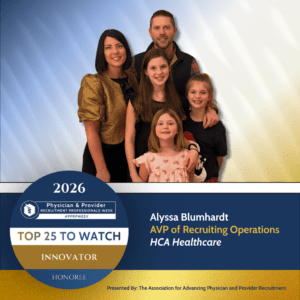


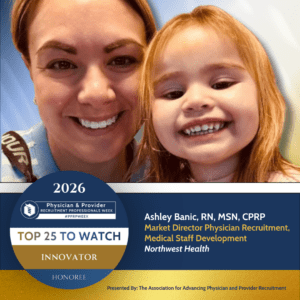
Learn more about each honoree and the impact they are making in physician and provider recruitment.
Professionals dedicated to guiding and supporting others in the field
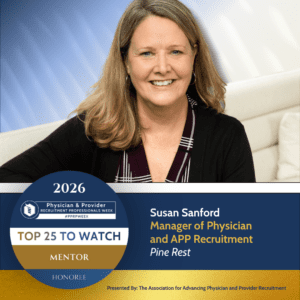
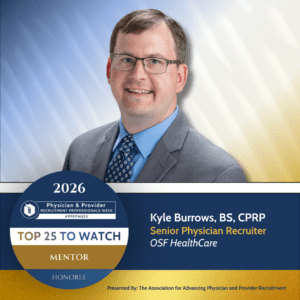

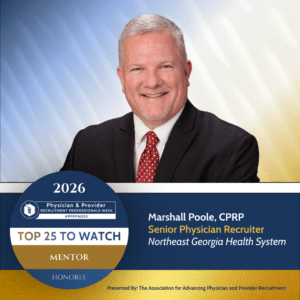
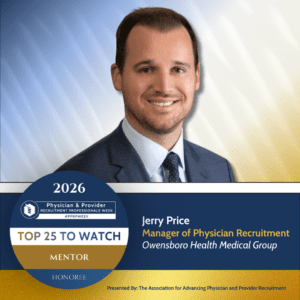
Learn more about each honoree and the impact they are making in physician and provider recruitment.
Emerging professionals making a strong impact early in their careers





Learn more about each honoree and the impact they are making in physician and provider recruitment.
Individuals who lead with vision, integrity, and a commitment to excellence
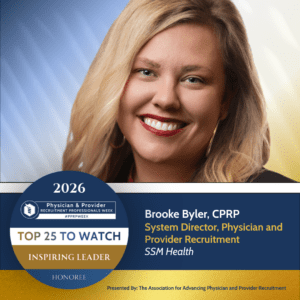




Learn more about each honoree and the impact they are making in physician and provider recruitment.
Meet the 2026 Inspiring Leaders
Recruitment teams demonstrating exceptional collaboration and results
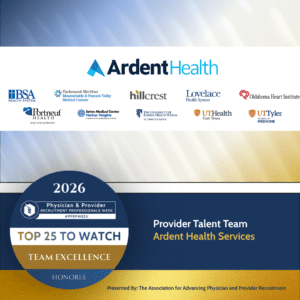
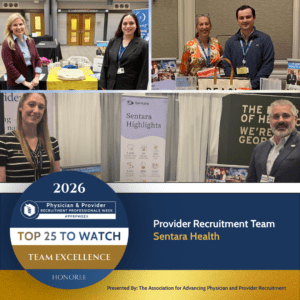
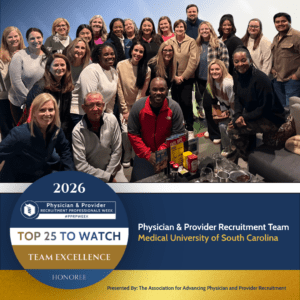
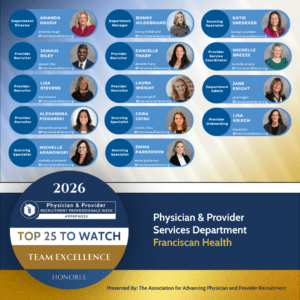
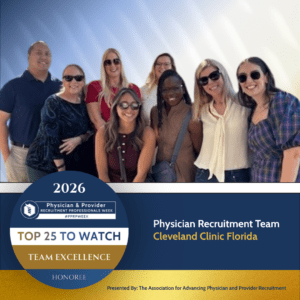
Learn more about each honoree and the impact they are making in physician and provider recruitment.
Meet the 2026 Team Excellence Honorees
PPRP Week is a time for the entire recruitment community to come together and recognize the professionals who help healthcare organizations grow and thrive. Share a photo of yourself, your team, or your organization celebrating PPRP Week, and help us highlight the incredible work happening across the recruitment profession.
Use your graphic to celebrate the week and help raise awareness about the important work recruitment professionals do every day.

One of the best ways to celebrate PPRP Week is by sharing the people and teams who make a difference in physician and provider recruitment.
AAPPR uses cookies for functional and analytical purposes. By continuing to browse or by clicking “Accept,” you agree to the storing of cookies on your device to enhance your site experience. To learn more about how we use cookies or how to change your settings, please see our privacy policy.
Accept Close