
Have a question?
Contact us
The Association for Advancing Physician and Provider Recruitment (AAPPR) is redefining recruitment to retention and is the only professional organization where physician and provider recruitment leaders and others who influence recruitment, onboarding and retention can connect, learn and advance their careers.
We are now just three weeks away from the November 3 midterm elections, and attention on Capitol Hill has largely shifted to the campaign trail. Democrats seem well-positioned to take the House, while the Senate map has become increasingly competitive. Regardless of the outcome, Congress will return for a short lame duck session with limited time to address outstanding priorities before the new Congress convenes in January. Government funding will be a central focus, leaving a narrow window for other legislative priorities. In the meantime, we continue to track several important regulatory and legislative developments affecting physician and provider recruitment.
The $100,000 fee on certain H-1B petitions remains tied up in litigation, but the fee is not currently being collected following a federal court ruling earlier this year. We are hearing encouraging reports that more H-1B petitions are moving through the approval process, although the legal uncertainty remains. The Administration renewed the underlying proclamation in September, and pending appeals could still change the situation. We will continue monitoring developments on this proclamation and encourage you to reach out with any questions.
Beyond the $100,000 fee, the Department of Homeland Security has proposed two additional regulations that could impact physician recruitment.
The first would establish a new $103,265 fee for cap-subject H-1B petitions, creating another significant cost barrier for healthcare employers that rely on international recruitment. The proposal would not apply to cap-exempt petitions, including those filed by certain universities and research organizations.
The second proposal would eliminate the current 60-day grace period that allows certain employment-based visa holders to remain in the United States after their employment ends while seeking a new position or immigration status. This could create additional challenges for physicians changing employers and healthcare organizations working to recruit them.
Neither proposal has been finalized. AAPPR will continue tracking both regulations and their potential impact on the physician workforce.
Congressional efforts to reform Medicare physician reimbursement remain an important priority, although the limited legislative calendar makes significant progress before year-end uncertain. We continue to monitor bipartisan efforts to provide greater payment stability and address longer-term reimbursement challenges that affect physician practices and access to care.
Meanwhile, states are preparing to implement significant Medicaid changes enacted last year, including new work requirements and more frequent eligibility reviews beginning in January 2027. These changes could affect coverage, hospital finances, and workforce needs, particularly in rural and underserved communities.
We will continue to keep members updated as these issues develop and as Congress returns following the elections.
See how AAPPR’s 2026 Physician and Provider Recruitment Benchmarking Report can help your team make smarter staffing decisions, set realistic hiring timelines, justify resources and focus effort where it will have the greatest impact.
Recruitment leaders regularly face questions about whether searches are taking too long, teams have enough resources and recruitment dollars are being spent effectively. Answering those questions requires more than knowing your own numbers; you need to understand how they compare.

AAPPR’s 2026 Physician and Provider Recruitment Benchmarking Report: Search Dynamics and Trends gives recruitment professionals that context, drawing on more than 10,000 physician and provider searches active in 2025 from recruitment teams that collectively recruit for more than 21,000 unique healthcare locations.
The report provides benchmarks recruitment teams can use to evaluate performance, inform workforce planning and strengthen conversations with organizational leadership. With physician searches remaining lengthy, half of physician searches still open at year-end and recruitment teams managing steady workloads amid declining internal budgets, that context is increasingly important.
While the topline findings offer an industrywide view, the full report and benchmarking tools allow recruitment teams to dig deeper into the factors most relevant to their own organization.
Here are five ways to put that data to work.
When a position has been open for months, recruitment teams may face questions about why a search is taking so long. Benchmarking can provide valuable context for those conversations.
In 2025, physician searches took a median of 119 days to fill, compared with 65 days for advanced practice provider searches. Timelines also varied significantly by specialty, reinforcing why a single industrywide benchmark does not tell the whole story.
Use these benchmarks to compare your organization’s performance with national trends and establish realistic expectations with hiring leaders at the beginning of a search. The full report provides specialty-level benchmarks that can help teams make more meaningful comparisons based on the positions they are actually trying to fill.
Search volume has moderated from its recent peak, but recruiter workloads have remained relatively steady.
Together, those numbers can help recruitment leaders tell a more complete story about team capacity. By comparing your organization’s staffing, budget and workload against industry benchmarks, you can bring objective data into conversations about the resources your team needs and show organizational leaders how your team’s capacity compares with relevant industry benchmarks.
Overall benchmarks can provide valuable context, but specialty-level data can help recruitment teams pinpoint where hiring challenges are most pronounced.
At the end of 2025, 50% of physician searches remained open, up from 49% in 2024 and 47% in 2023. Some specialties faced even greater challenges. By the end of the year, just 28.3% of urology searches were filled, along with 33.3% of neurology and 33.6% of cardiology searches. Anesthesia and gastroenterology searches were also filled less than half of the time.
For recruitment teams, these benchmarks can help identify where a different approach may be needed. Compare specialty-level fill rates with your own search portfolio to determine which roles may benefit from earlier pipeline development, additional sourcing strategies or greater recruitment resources.
The full report provides specialty-level data on search volume, fill rates and recruitment timelines, allowing teams to identify where their greatest hiring challenges align with broader industry trends.
A signed contract is an important milestone, but it does not mark the end of the recruitment timeline.
The typical physician began work 229 days after the position was posted in 2025, reflecting the additional time needed for credentialing, privileging, licensing, onboarding and other steps before a new hire can begin.
That distinction matters for workforce planning. Recruitment teams can use the full recruitment-to-start timeline to help organizational leaders understand when a new physician will realistically be in place and plan earlier for anticipated workforce needs.
Benchmarking these timelines can also support stronger collaboration with credentialing, medical staff services and other internal partners involved in moving a candidate from acceptance to start.
While fill rates can show where recruitment challenges are greatest, search volume provides another important perspective: where organizations are seeing the greatest demand.
Family Medicine represented 11.6% of physician searches in 2025, followed by Hospital Medicine at 10.9% and general OB/GYN at 6.6%.
Compare national demand with your own search portfolio. Which specialties consistently account for your vacancies? Where could earlier pipeline development help your organization prepare for recurring workforce needs rather than starting from scratch each time a position opens?
Use these demand benchmarks alongside your own workforce needs to identify where earlier pipeline development and proactive sourcing could have the greatest impact.
National trends are a valuable starting point, but the real power of benchmarking comes from understanding how your organization compares.
Are your physician searches taking longer than the benchmark? How does your recruiter workload compare? Are your recruitment resources aligned with the volume and types of searches your team manages?
The 2026 AAPPR Physician and Provider Recruitment Benchmarking Report: Search Dynamics and Trends provides the deeper benchmarks across staffing, search volume, specialty demand, sourcing, search firm usage and costs, fill rates, recruitment timelines and technology to help recruitment professionals answer those questions and turn industry data into organizational strategy.
Purchase the full 2026 report to see how your recruitment performance compares and identify opportunities to strengthen your strategy. Survey participants receive complimentary access to the AAPPR Benchmarking Portal, which includes advanced search tools, time-to-fill and compensation calculators, and customizable benchmarking capabilities.
Explore the 2026 report and AAPPR’s benchmarking resources at aappr.org/research/benchmarking.
Last Updated: September 22, 2026
On September 18, the Trump Administration extended for another year the proclamation imposing a $100,000 payment requirement on certain new H-1B petitions for workers outside the United States. The policy, which was set to expire this month, is now scheduled to remain in place through September 21, 2027.
The extension does not resolve the ongoing court challenges over whether the Administration has legal authority to impose the $100,000 fee. As we reported in July, a federal judge in Massachusetts struck down the fee, and the First Circuit subsequently declined to put it back into effect while the government appeals. As a result, the $100,000 payment is not currently being collected under that ruling.
The Administration’s latest action does mean, however, that the underlying policy will remain in place for another year if the government ultimately prevails in court.
Separately, a new Executive Order directs federal agencies to increase coordination and scrutiny of H-1B petitions, including by considering whether sponsoring employers have recently laid off, or plan to lay off, similarly situated U.S. workers.
For health care employers, the legal uncertainty therefore continues. AAPPR will continue monitoring the litigation and other H-1B policy developments. We will also continue advocating for policies that ensure health care organizations can recruit the physicians and other providers their communities need.
Congress is back from its August recess, but only briefly. The House is in session for its final legislative week before the midterms, and the Senate is scheduled to stay through the end of the month. Congress has already passed a stopgap funding bill that keeps the government open through December 11, so there is no shutdown pressure this month. The Senate has spent its limited floor time on unrelated issues such as cryptocurrency and college sports legislation. Government funding and other major priorities, including those affecting our members, will likely be decided in the lame duck session between the election and the start of the new Congress in January. In the meantime, there is plenty of legislative and regulatory activity we are tracking and covering below.
On September 10, AAPPR joined the National Association Medical Staff Services (NAMSS) for its 12th annual industry roundtable, focused on building pathways for internationally trained physicians (ITPs). AAPPR was the only physician recruitment organization at a table that included certifying and accrediting bodies, credential verification organizations, hospital and physician associations, and state medical boards. ITPs are physicians who completed their medical education, postgraduate training, and licensure outside the United States, distinct from international medical graduates who enter ACGME-accredited training here. Twenty-seven states and two territories have now enacted alternative licensure pathways for this population, with more legislation pending.
The discussion covered what organizations need in place to onboard these physicians, spanning credential verification, immigration, state licensure, medical staff appointment, and payer enrollment. AAPPR contributed the recruitment and onboarding perspective. The group agreed that NAMSS should develop resources on the topic, and AAPPR will continue to participate as that work moves forward.
AAPPR has endorsed a Congressional Review Act resolution of disapproval targeting the DHS rule that would end “duration of status” for J-1 physicians and other international students.
The Congressional Review Act gives Congress a formal mechanism to overturn a recently issued federal regulation. The resolution was introduced by Senator Dick Durbin (D-IL) with Senate cosponsors and a House companion led by Representatives Pramila Jayapal (D-WA) and Jamie Raskin (D-MD), and is endorsed by a broad coalition that includes the AAMC, the American Academy of Family Physicians, the American Academy of Pediatrics, the American Osteopathic Association, and more than forty other organizations.
We supported the resolution because the rule would replace open-ended admission for J-1 physicians with fixed periods capped at four years at a time, requiring anyone who needs more time to apply to USCIS and wait. That creates real risk of disruption for residents in longer training programs, physicians moving from residency into fellowship, and programs managing routine situations like medical or parental leave.
Separately, a federal court issued a nationwide injunction on September 14 blocking the rule from taking effect while litigation proceeds. That is a temporary hold rather than a final resolution, and the government is expected to appeal, so we are continuing to engage on both fronts and will keep members updated.
Congress created the Rural Health Transformation Program in the 2025 budget reconciliation law. The program provides $50 billion over five years ($10 billion annually from FY2026 through FY2030) to strengthen rural health care. CMS approved all 50 states for funding, with first-year awards averaging about $200 million per state.
States now distribute the money to hospitals, practices, and training programs through their own lead agencies. Recruiting and retaining clinicians in rural communities is one of the program’s approved uses. Members recruiting in rural markets may want to check their state agency’s award lists and upcoming funding rounds. Below are two notable examples from the last month:
Please reach out if you have any questions on this fund or any other issues.
The Association for Advancing Physician and Provider Recruitment (AAPPR) has released its annual Physician and Provider Recruitment Benchmarking Report: Search Dynamics and Trends, offering new insights into physician and advanced practice provider (APP) recruitment activity across the United States.
The 2026 report shows that physician and provider search volume held roughly steady in 2025 following earlier highs, while recruitment teams continue to face significant workloads, lengthy hiring timelines and persistent physician vacancies. The typical organization managed 100 searches in 2025, compared with a peak of 115 in 2023. Recruiters individually managed a median of 36.5 searches, essentially unchanged from 35.6 in 2024. Meanwhile, the median annual budget for internal physician recruitment departments declined 7.4% year over year, from $553,376 in 2024 to $512,500 in 2025.
“We’re watching the physician shortage move from concern to reality,” said Carey Goryl, CEO of AAPPR. “Without meaningful changes to how we train and recruit physicians, patients will feel this first as longer waits for critical care increase. Our data shows that searches in high‑impact specialties like cardiology, urology, neurology, anesthesiology, and gastroenterology are increasingly difficult to fill. This a clear warning sign that our physician pipeline isn’t keeping up.”
The research includes data on more than 10,000 physician and provider searches active in 2025 from recruitment teams that collectively recruit for more than 21,000 unique healthcare locations. Nearly 60% of reported searches were for physicians.
Notable findings from the 2026 AAPPR Physician and Provider Recruitment Benchmarking Report include:
Median time to fill for APP searches declined from 80 days in 2024 to 65 days in 2025. Physician searches took a median of 119 days, with significant variation by specialty. Endocrinology/Metabolism took the longest at a median of 321 days, followed by Oncology at 244 days.
The typical physician began work 229 days after the position was posted, highlighting the additional time required for credentialing, privileging, licensing and onboarding.
Family Medicine accounted for 11.6% of physician searches in 2025, followed by Hospital Medicine at 10.9% and general OB/GYN at 6.6%.
As of Dec. 31, 2025, 50% of physician searches remained open, up from 49% in 2024 and 47% in 2023. By comparison, 31.8% of APP searches remained open at the end of 2025.
By the end of 2025, 28.3% of urology searches were filled, while only about one-third of neurology and cardiology searches were filled. Anesthesia (40.1%) and gastroenterology (40.5%) searches were also filled less than half of the time.
The industry-level data equips healthcare organizations with benchmarks to evaluate recruitment performance, resources and workforce planning strategies. Participants in the survey gain complimentary access to the AAPPR Benchmarking Portal, which includes advanced search tools, time-to-fill and compensation calculators, and customizable benchmarking capabilities.
The complete 2026 AAPPR Physician and Provider Recruitment Benchmarking Report: Search Dynamics and Trends is available for purchase online. The companion 2026 AAPPR Recruitment Team Professional Compensation Benchmarking Report is also available, providing additional insight into recruiter compensation and recruitment team structures. To access AAPPR benchmarking research and resources, visit www.aappr.org/research/benchmarking.
Congress is in recess this month but has no shortage of issues when it returns after Labor Day. We are less than three months from the upcoming midterms elections so the expectation when Congress returns is that they will focus on funding the government and then return to the campaign trail. That said, members are angling for key policy issues to be positioned to advance in the lame duck session, which means clearing committee hurdles and or advancing from one chamber to the other before Congress leaves town again.
The DHS rule ending “duration of status” takes effect September 15, and we are continuing to monitor it closely for potential disruption to the J-1 physician pipeline. A few things worth knowing as of the latest guidance from the State Department and Intealth:
We will keep you posted as federal guidance develops. Please let us know if you have any questions.
The $100,000 fee on certain H-1B petitions is not being charged right now. A federal court struck it down in June, ruling the government didn’t have the authority to impose it. In July, an appeals court declined to put the fee back in place while the case moves forward. The government has stopped collecting for now, but says it will resume if the ruling is reversed.
While the fee only hit petitions for candidates who were outside the U.S. seeking a H-1B visa, this isn’t over as a different court upheld the fee last December, appeals are still pending, and things could change again.
The proclamation that established the fee in September 2025 expires next month, unless the Administration extends it. We will follow up as we learn whether it will be renewed.
AAMCNews profiles a WVU Medicine clinic in Glenville, West Virginia, where neurologists drive 90 minutes from Morgantown once a month so that patients across nine rural counties don’t have to make the trip themselves. The piece uses that clinic as a window into the projected shortfall of roughly 70,000 specialty physicians by 2036, and reviews the policy levers in play, from expanding Medicare-funded residency slots to rural residency tracks and greater use of specialist NPs and PAs.
Recruiter pay is up, turnover is down and AI still can’t replace the human side of physician recruitment. Four findings from AAPPR’s 2026 Compensation Report.
Physician and provider recruitment professionals are earning more and staying longer, and the numbers make a strong case for investing in the people behind the hire. AAPPR’s 2026 Recruitment Team Professional Compensation Benchmarking Report surveyed 428 internal physician and provider recruitment professionals, 396 of whom shared compensation data, to capture where the profession stands today.
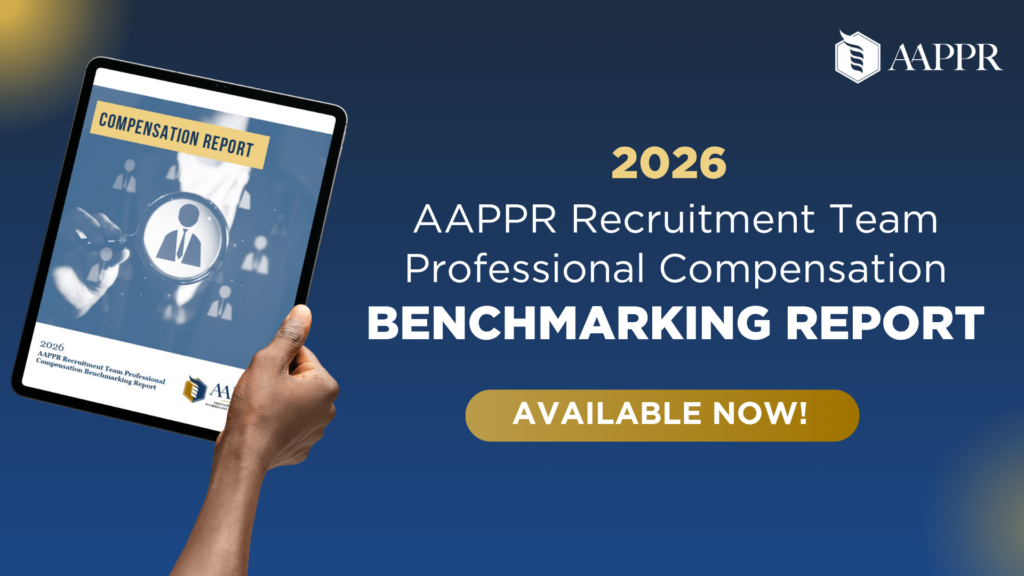
Here are four findings from the report that recruitment leaders should factor into their 2026 planning, including what the data suggests about AI’s role on recruitment teams.
Median total cash compensation across all recruitment professional roles reached $101,000 in 2025, up 9.8% from 2024 and the highest level reported since AAPPR began tracking the data. The report also confirms that experience continues to be the primary driver of compensation.
Recruiter turnover dropped almost 8% in 2025. Team structure and organization size both play a role, but the more compelling explanation may be a human one. Similarly found in AAPPR’s Heart Behind the Hire report, 87% of in-house recruiters feel genuinely called to this work, a reminder that people stay in roles that feel meaningful, not just ones that pay well.
Rising pay and falling turnover moved together this year, suggesting that institutional knowledge is being built and retained inside organizations that are choosing to invest in their people.
Remote and hybrid arrangements are now the standard for recruitment teams, with only 7% reporting they work entirely in person. That flexibility isn’t just a perk. It also tracks with higher compensation, suggesting organizations that let go of rigid in-office expectations see it pay off in more ways than one.
Leadership roles tell a different story, with directors and managers still the least likely to work remotely, a sign that the trade-off between flexibility and supervisory responsibilities hasn’t gone away.
The report’s data offers an answer to a question hospital and health system leaders are increasingly asking: can AI take over parts of the recruitment function? The findings suggest recruitment remains a relationship-driven profession that technology cannot replicate:
AI can support a recruiter’s workflow, but it cannot create the same trust that is built with a physician candidate over months or understand the deep community knowledge gained over years inside an organization. For health system leaders evaluating where to apply AI tools, the data points toward augmenting recruiters, not replacing them.
Recruitment teams sit at the center of healthcare workforce challenges, and the 2025 data makes a clear case for what works: competitive pay, flexible work arrangements and a focus on the personal fulfillment that keeps recruiters in the profession. Organizations that treat these as investments, not expenses, are the ones that see turnover fall and compensation rise together.
To purchase the full 2026 Recruitment Team Professional Compensation Benchmarking Report with detailed data, explore customized benchmarks, and access tools like the Advanced Search, Compensation Calculator and infographics, visit the AAPPR Benchmarking Portal at aappr.org/research/benchmarking/.
Last Updated: July 27, 2026
On July 24, the U.S. Court of Appeals for the First Circuit denied the Trump Administration’s request to stay a lower court order that vacated the $100,000 H-1B fee, clearing the way for that ruling to take effect. What this means in practice is that the $100,000 payment is no longer required on covered H-1B filings for the time being, even as the broader legal fight continues.
Here is a quick look at how we got here:
The bottom line from the appeals court is that it is Congress’s job, not the president’s, to impose new fees on immigrant visas.
In September 2025, a presidential proclamation imposed a $100,000 payment requirement on new H-1B visa petitions filed on or after September 21, 2025. The fee was a one-time charge at filing for those not currently in country, with potential for exceptions if deemed in the national interest, which the Administration never exercised. It did not apply to renewals, previously filed petitions, or current H-1B holders. You can read previous updates on the H-1B policy here.
This is a significant development for health care employers, physician and provider recruitment teams, and international medical graduates. The $100,000 fee had created a major cost barrier for H-1B sponsorship, and its removal eases a critical pressure point for organizations working to fill physician, IMG, and specialty provider gaps.
We expect USCIS to adjust its filing instructions to reflect the decision in the coming weeks. In the meantime, organizations with H-1B petitions in the pipeline should connect with their immigration attorneys to understand how the ruling affects their specific filings.
That said, we are not out of the woods yet. The government is still pressing its appeal in the First Circuit, and related lawsuits remain active in both the Northern District of California and the D.C. Circuit. This case reaching the Supreme Court is possible. But the trajectory is encouraging as the fee has been struck down, the emergency stay has been refused, and the appeals court has indicated that the legal arguments supporting the fee face an uphill battle.
AAPPR will continue to closely monitor this case and support efforts, including H.R. 7961, the H-1Bs for Physicians and the Healthcare Workforce Act, to permanently exempt health care professionals from the $100,000 H-1B fee so health care employers can recruit the physicians, IMGs, and other providers their communities need.
Congress is about two weeks away from adjourning for its August recess, and lawmakers are hoping to address several outstanding items before leaving Washington. When they return in September, they will have less than a month in session before attention shifts again to the midterm elections. While there are some areas of bipartisanship, there are also points of intraparty tension, particularly between the House and Senate. The key question is whether Congress can come together to fund the government by September 30, likely through a continuing resolution that extends beyond the midterms and avoids another painful government shutdown.
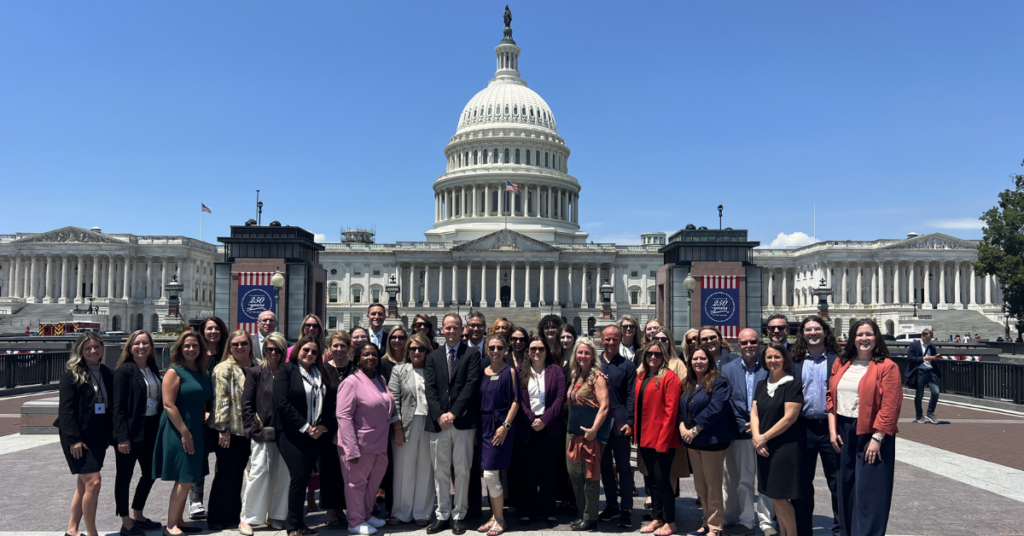
Last month, AAPPR leaders took to Capitol Hill to meet with lawmakers to discuss key issues impacting provider recruitment and retention. We met with over 50 congressional offices across the political spectrum to highlight four pieces of bipartisan legislation that would meaningful address many of the challenges faced by healthcare employers, providers, and importantly, patients. These included addressing Medicare reimbursement issues, investing in Graduate Medical Education (GME), exempting healthcare workers from the $100,000 H-1B fee, and reauthorizing the Conrad 30 program.
This was a great opportunity to raise awareness about physician recruitment and other provider issues, and to begin building relationships with offices where our members live and work. There will be more exciting opportunities like this in the future an we encourage you to get involved.
The bipartisan Patients First Act was introduced by Reps. John Joyce (R-OH), Greg Murphy (R-NC), and Kim Schrier (D-WA), the respective chairs of the Republican and Democratic Doctors Caucuses in Congress, as an effort to update Medicare physician payment policy and strengthen access to care. The bill is especially relevant because it addresses some of the financial and administrative pressures that can make it harder for physicians to remain in practice, particularly in independent, rural, and underserved settings.
The proposal would tie physician payment more closely to the cost of providing care, invest in primary care, simplify quality reporting, and support participation in value-based care models. AAPPR is closely reviewing the legislation and will follow up with more details and potential next steps.
The Trump Administration recently issued a final rule replacing the long-standing “duration of status” framework for certain visa holders, including J-1 exchange visitors, with fixed periods of admission and a formal extension process through federal immigration authorities. While the rule is framed by DHS as a way to increase oversight, medical and recruitment organizations have raised concerns about what it could mean for the physician workforce, especially for international medical graduates who train and practice in the United States.
From a recruitment and retention perspective, the concern is that new extension requirements during residency or fellowship could add uncertainty, paperwork, and possible interruptions in training or clinical service, making it harder for programs to attract and keep the physicians their patients rely on. AAPPR is reviewing the final rule and will follow up with additional information. Please reach out if you have any questions.
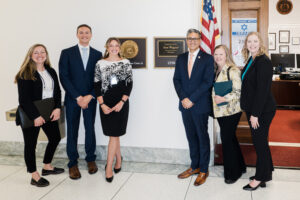
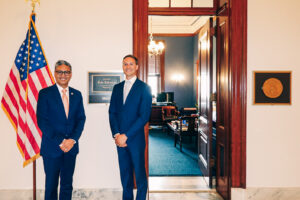
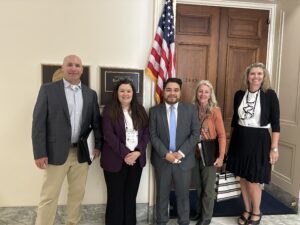
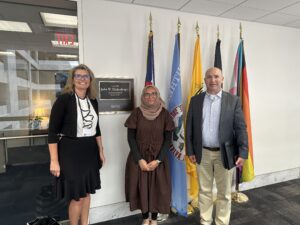
On June 25, 2026, 38 AAPPR member volunteers brought their expertise where it matters most – directly to Congress. In a series of meetings across House and Senate offices, physician and provider recruitment professionals made the case that workforce policy is patient access policy, and that AAPPR members are the experts policymakers need to know.
AAPPR members are directly involved in ensuring patients can access care by helping health care organizations recruit and retain the physicians and providers their communities need.
Advocacy Day was designed to elevate AAPPR’s voice at the federal level and to position our members as credible, on-the-ground resources for congressional offices navigating some of the most consequential health care workforce decisions in years.
Members didn’t just arrive with policy priorities. They arrived with stories: unfilled positions, recruitment pipelines that work, communities still waiting for the specialists they need. That specificity is what makes AAPPR’s voice distinct.
Across the day, members held 55 congressional meetings – a collective effort that put physician workforce issues in front of a broad cross-section of legislators.
Conversations were grounded in the real barriers members face every day:
By the end of each meeting, AAPPR’s goal was for congressional staff to leave knowing four things:

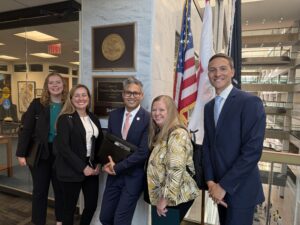
Advocacy Day is the beginning of an ongoing commitment. The relationships built on June 25 will be cultivated over time, and AAPPR will continue to serve as a resource to policymakers as they shape the future of health care delivery.
If you attended – thank you. If you didn’t, stay engaged. Follow AAPPR’s advocacy updates and look for future opportunities to add your voice to the issues that define this profession.
Stay connected with AAPPR’s advocacy efforts at aappr.org/government-affairs/.
AAPPR uses cookies for functional and analytical purposes. By continuing to browse or by clicking “Accept,” you agree to the storing of cookies on your device to enhance your site experience. To learn more about how we use cookies or how to change your settings, please see our privacy policy.
Accept Close